
Adv. Dina Dominitz for expert meeting about combatting demand that fuels sex trafficking.
Місяць: Квітень 2025
Експертна зустріч: «Сучасні виклики у вирішенні проблеми сексуальної експлуатації в Інтернеті»
18 квітня 2025 року відбулась експертна онлайн-дискусія на тему «Сучасні виклики у вирішенні проблеми сексуальної експлуатації в Інтернеті». Це другий захід із серії дискусій, організованих ГО “Центр – Розвиток демократії» за ініціативи Міністерства соціальної політики України, у співпраці з Громадською радою при міжфракційному об’єднанні «Рівні можливості» Верховної Ради України, Національним агентством України з питань державної служби, Вищою школою державного управління та за підтримки Структури «ООН Жінки в Україні». English
Захід відкрили:
• Марія Дмитрієва, директорка програм ГО «Центр – Розвиток демократії»;
• Представник Міністерства соціальної політики України;
• Представник Вищої школи державного управління;
• Олександра Новікова, Європейська мережа жінок-мігранток (ENoMW).
Були запрошені експерти та експертки:
• Тарана Багірова, асистентка програм, ОБСЄ — «Ризики та реагування на торгівлю людьми з метою сексуальної експлуатації в Інтернеті»;
• Таїна Б’єн-Еме, виконавча директорка, Коаліція проти торгівлі жінками (CATW), США;
• Василь Філоненко, громадська організація «Стоп секстинг», Україна;
• Люба Фейн, «Голоси жертв секс-торгівлі в Ізраїлі», Ізраїль;
• Тетяна Котляренко, незалежна консультантка з питань прав людини, Швейцарія.
Теми обговорення є частиною міжнародних зобов’язань України, зокрема, Конвенції ООН про ліквідацію всіх форм дискримінації щодо жінок (CEDAW), Резолюції Ради Безпеки ООН 1325 «Жінки, мир, безпека», та є важливими в контексті адаптації українського законодавства до норм Європейського Союзу та зобов’язань перед іншими міжнародними структурами. Ці теми стають ще більш актуальними в умовах повномасштабної війни, зростання вразливості жінок та зростання гендерно зумовленого насильства.
На початку повномасштабного російського вторгнення до України біженки до країн Європи та їхні діти стали цілями тих, хто створює кримінальний сексуальний контент, в тому числі з неповнолітніми. Це засвідчила незалежна консультантка з прав людини, експертка з питань гендерного насильства та торгівлі людьми Тетяна Котляренко (Швейцарія). З її слів, при розгляді цієї проблеми особливо треба зауважити на становищі українських мігранток.
«Хотіла би повернутися на початок повномасштабного російського вторгнення, коли як дорадниця з прав жінок та дітей опитувала тих, хто виїхав з України. Ці жінки і діти були цілями тих, хто мав намір створювати сексуальний контент, у тому числі з неповнолітніми, незаконного характеру. Вразливі українки та їхні діти стали ціллю сексуальної онлайн-експлуатації, попит саме на онлайн є дуже великим, адже порнографія, яка виробляється, це теж експлуатація. Вже те, що ці люди є біженцями, вже це робить їх набагато вразливішими. Ми проводили тренінги для тих, хто працює з біженцями від війни в України, то навіть на тренінгу до них чіплялися з такими пропозиціями», – засвідчила пані Тетяна.
З її слів, необхідно говорити про природу онлайн-експлуатації, бо нині діючі закони зосереджені на традиційному уявленні про експлуатацію та торгівлю людьми, хоча зараз багато вербування йде саме онлайн.
«Злочинці контактують онлайн, навіть сутенерів не потрібно, людей використовують через інтернет. Багато технічних способів. Ще важливо говорити про зміни, які йдуть через технологію. Зараз багато говорять про штучний інтелект. Його можна використовувати і для хороших цілей, але торгівці людьми розширюють свою діяльність з його допомогою. Вони швидко знаходять вразливих жінок, дітей, використовують для грумінгу, це як «технічний сутенер». Еволюція технологій розширює експлуатацію жінок і дітей, навіть дітей, які зараз є в Україні, бо до них можна звертатися через Інтернет», – пояснює експертка.
Показово, що зараз говорять про захист дітей з України, але в тих же країнах вони злочинно використовують дітей з України. Біля 300 дітей забрали з таких ситуацій, їх затягнули до секс-експлуатації через інтернет. Ще є розуміння різних моделей того, в чому ефективність запобігання. Нормалізація онлайн спілкування, каже Тетяна Котляренко, – це модель рівності, або шведська модель. Вона може захистити жінок і дітей, якщо вона застосовується, то всі вразливі люди, яких залучають до сексуальної діяльності, мають отримати захист, а ті хто їх використовує, мають бути покарані. Сьогодні же будь-яка жінка в Україні і дитина є вразливими, а порнографія є величезною провідною силою, яка тягне весь цей потяг секс-експлуатації.
Олександра Новікова, котра очолює Європейську мережу жінок-мігранток (ENoMW), підтвердила, що саме жінки-мігрантки є найбільш вразливою групою за кордоном через брак коштів, часто через борги, мовні та культурні бар’єри. Жінки бояться звертатися до поліції, щоб не втратити якісь свої права, не бути депортованими. Жінка є жертвою погроз, маніпуляцій, які втягують її у сексуальну експлуатацію. Зі слів Олександри Новікової, коли жінка їде до іншої країни, на неї одразу йде онлайн атака звідти, де вона реєструвала свою адресу. Пропонують «роботу моделі» або вислати фото. Щоб уникнути цього, треба знати, де і як шукати допомогу, також необхідно розробляти політики проти насильства.
Асистентка програм ОБСЄ Тарана Багірова констатувала, що технології є двостороннім явищем: з одного боку, вони корисні для освітніх цілей, з другого, вони стали провідником онлайн сексуальної експлуатації. Масштаби жахливі: за дослідженнями, основна частина інтернет технологій є підтримкою кримінальних структур. Технології використовуються на всіх етапах, від вербування до контролю за жертвами. Контроль за жертвами, серед яких значна частина – неповнолітні дівчата, може бути у різних формах. Це, наприклад, погроза виставити їхній контент на загал. Фізично жертва при цьому вільна, але її шантажують. Є випадки, коли гвалтівники знімають жертву на відео і погрожують додатково якось зашкодити її родичам.
Також з початку повномасштабного російського вторгнення в Україні значно зросли ризики залучення жертв до сексуальної експлуатації онлайн та оффлайн, ознакою злочинності є замасковані оголошення про «роботу». У 2023 році в Великобританії прийняли закон, згідно з яким різні онлайн платформи несуть пряму відповідальність за контент, який на них розміщують.
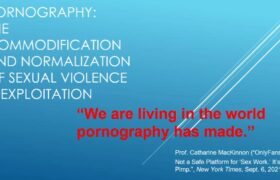
Виконавча директорка Коаліції проти торгівлі жінками CATW (США) Таїна Б’єн-Еме уточнила, що термінологія “секс-робота” тощо була винайдена, щоб нормалізувати проституцію та торгівлю жінками. Згідно з Палермським протоколом, проституція є торгівлею людьми, не можна дати згоду на власну експлуатацію, і наявність згоди не робить злочин законною дією. Всі ці міжнародні документи зобов’язують Україну протидіяти сексуальній експлуатації жінок та дівчат. В червні 2024 року на рівні ООН вперше прозвучало, що проституція та порнографія є порушенням прав людини. Порнографія – це фільмування проституції, перетворення людей на товар онлайн-сутенерами: платформа Onlyfans заробила за рік 6,6 мільярдів доларів США. Провайдери допомагали торгівцям людьми краще поширювати свою рекламу, закони були прописані так, що вони не несли відповідальності за контент.
Люба Фейн, котра представляла на заході організацію «Голоси жертв секс-торгівлі в Ізраїлі», також зауважила, що індустрія сексуальної експлуатації стрімко адаптується до цифрової доби. Закони не встигають за реальністю, сутенери вже запускають онлайн додатки. З її слів, раніше між Ізраїлем та колишніми країнами СРСР була створена мережа торгівлі людьми та проституції. У жертв та сутенерів було спільне знання мови, культури, це викликало довіру, але в самій країні жінки опинялися беззахисними, оскільки сутенери мали громадянство і знали країну, а вони ні. Запроваджений закон проти торгівлі людьми це все обмежив, але з 2022 року все знову почало розбудовуватися.
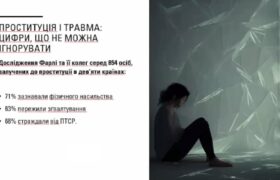
За останні роки в Ізраїлі виявили три мережі торгівлі жінками, де експлуатували українок, котрі тікали від війни за кордон. Ця індустрія маскується, але її сутністю лишається насильство і контроль. Це частини єдиної системи, котра руйнує життя ізраїльтянок та іноземок. Все позитивне маскування є брехливим. Онлайн акаунти жертв сексуальної експлуатації ведуть сутенери, про це є чимало свідчень. В місяць проституйовані жінки можуть отримувати до 150 доларів США, розхвалені надприбутки належать сутенерам. Telegram це окремий даркнет, там маса груп, де просувають проституцію. Наслідки проституції – жахливі довготривалі травми. Згідно з опитуванням 854 осіб у 9 країнах, 27% з них мали психіатричну госпіталізацію, 37% мали спроби суїциду, розлади харчування, також лікували інфекції. 71% опитаних пережили у проституції насильство, 63% були зґвалтовані, 68% мали ПТСР. В інтернеті проституція стає ще жахливішою, оскільки її фіксують на відео і постійно повторюють далі. В Ізраїлі вже прийняті спеціалізовані закони проти цього, але вони слабко працюють. В Україні, зі слів Люби Фейн, порнографію хочуть замаскувати під відновлення країни. Дохід задіяних жінок від цього малий, і невідомо, скільки буде витрачено на їхню реабілітацію. «Секс індустрія не є якоюсь сукупністю жінок, які нібито хочуть багато сексу. Ніяка економіка так не працює, пропозицію завжди створює попит. Все організує той, хто отримує прибуток. Українські феміністки є неймовірними, навіть переживаючи війну, вони борються з цим у цей важкий час», – подякувала за участь в онлайн зустрічі Люба Фейн.
Представник української громадської організації «Стоп секстінг» Василь Філоненко розповів, що нині в школі семикласники знають, як купити через Telegram наркотик, тим більше мають доступ до порноконтенту і самі можуть легко стати жертвою онлайн торгівлі людьми. Порноконтент є нормалізацією насильства, він згубно впливає на дитячий мозок. Створення, поширення порноконтенту є кримінальною відповідальністю, чого не розуміють люди, які не вбачають криміналу в поширенні власних фото та відео. Так само насильство над дитиною часто починається з онлайн контакту.
Гендерна експертка Марія Дмитрієва уточнила, що за 11 років від початку російського вторгнення в Україну на сході та в Криму в даркнеті зросла кількість злочинного відео з дітьми на окупованих українських територіях. До 1/3 відео зі зґвалтуваннями дітей знімались саме там.
Заходи ГО «Центр – Розвиток демократії» проводяться в рамках підготовки до розробки нової Державної цільової соціальної програми боротьби з торгівлею людьми на період до 2025 року. Почути голоси експертів з різних країн є критично важливим для якісного оновлення української політики та врахування як нових викликів, так і нововведень у міжнародному праві та нормах у відповідь на ці проблеми.
Expert Meeting: “Contemporary Challenges in Addressing Online Sexual Exploitation”
On April 18, 2025, an expert online discussion was held on the topic “Contemporary Challenges in Addressing Online Sexual Exploitation”. This is the second event in a series of discussions organized by the CSO “Democracy Development Center” at the initiative of the Ministry of Social Policy of Ukraine, in cooperation with the Public Council under the inter-factional association “Equal Opportunities” of the Verkhovna Rada of Ukraine, the National Agency of Ukraine for Civil Service Issues, the Higher School of Public Administration, and with the support of UN Women in Ukraine. українською
The event was opened by:
- Maria Dmytrieva, Program Director, Democracy Development Center;
- Representative of the Ministry of Social Policy of Ukraine;
- Representative of the Higher School of Public Governance;
- Oleksandra Novikova, European Network of Migrant Women (ENoMW).
The experts were invited:
- Tarana Baghirova, Programme Assistant, OSCE — “Risks and Responses to Trafficking for the Purpose of Online Sexual Exploitation”;
- Taina Bien-Aimé, Executive Director, Coalition Against Trafficking in Women (CATW), USA;
- Vasyl Filonenko, NGO “Stop Sexting”, Ukraine;
- Luba Fein, Voices of Israeli Sex Trade Survivors, Israel;
- Tatiana Kotlyarenko, Independent Consultant on Human Rights Issues, Switzerland.
The topics of discussion are part of Ukraine’s international obligations — in particular, the UN Convention on the Elimination of All Forms of Discrimination against Women (CEDAW), UN Security Council Resolution 1325 “Women, Peace, Security”, and are important in the context of adapting Ukrainian legislation to European Union norms and obligations to other international structures. These topics are becoming even more relevant in the context of full-scale war, increasing vulnerability of women, and increasing gender-based violence.
At the beginning of the full-scale Russian invasion of Ukraine, women-refugees to European countries and their children became targets of those who create criminal sexual content, including with minors. This was confirmed by independent consultant on human rights issues, expert on gender-based violence and human trafficking Tetyana Kotlyarenko (Switzerland). According to her, when considering this problem, it is especially necessary to pay attention to the situation of Ukrainian women-migrants.
“I would like to go back to the beginning of the full-scale Russian invasion, when, as an advisor on women’s and children’s rights, I interviewed those who left Ukraine. These women and children were hunted by those who intended to create sexual content, including with minors, of an illegal nature. Vulnerable Ukrainian women and their children became the target of online sexual exploitation, the demand for which is very high online, because the pornography that is produced is also exploitation. “The fact that these people are refugees already makes them much more vulnerable. We conducted trainings for those who work with refugees from the war in Ukraine, and even during the training they were approached with such proposals,” said Ms. Tetyana.
According to her, it is necessary to talk about the nature of online exploitation, because current laws focus on the traditional idea of exploitation and human trafficking, even though a lot of recruitment now takes place online.
“Criminals contact online, they don’t even need pimps, they use people via the Internet. There are many technical methods. It is also important to talk about the changes that are happening through technology. There is a lot of talk about artificial intelligence now. It can be used for good purposes, but human traffickers are expanding their activities with its help. “They quickly find vulnerable women and children, use them for grooming, it’s like a “technical pimp.” The evolution of technology is expanding the exploitation of women and children, even children who are now in Ukraine, because they can be contacted via the Internet,” the expert explains.
It is significant that now they are talking about protecting children from Ukraine, but in the same countries they are criminally exploiting children from Ukraine. About 300 children were taken from such situations, they were dragged into sexual exploitation via the Internet. There is still an understanding of different models of what is the effectiveness of prevention. Normalizing online communication, says Tetyana Kotlyarenko, is a model of equality, or the Swedish Nordic model. It can protect women and children, if it is implemented, then all vulnerable people who are involved in sexual activity should be protected, and those who exploit them should be punished. Today, any woman and child in Ukraine is vulnerable, and pornography is a huge driving force that pulls this whole train of sexual exploitation.
Oleksandra Novikova, who heads the European Network of Migrant Women (ENoMW), confirmed that migrant women are the most vulnerable group abroad due to lack of funds, often due to debt, language and cultural barriers. Women are afraid to contact the police, lest they lose some of their rights or be deported. Women are victims of threats and manipulations that involve them into sexual exploitation. According to Olexandra Novikova, when a woman goes to another country, she is immediately attacked online from the service where she registered her address. They offer to do “modeling work” or send photos. To avoid this, she needs to know where and how to seek help, and we also need to develop policies against violence.
Programme Assistant OSCE Tarana Baghirova stated that technologies are a two-sided phenomenon: on the one hand, they are useful for educational purposes, on the other, they have become a conduit for online sexual exploitation. The scale is terrifying: according to research, the bulk of Internet technologies are supporting criminal structures. Technologies are used at all stages, from recruitment to control of victims. Control of victims, a significant part of whom are underage girls, can take various forms. This can include threats to make their content public. The victim is physically free, but is being blackmailed. There are cases where rapists videotape the victim and threaten to harm her relatives in some way.
Also, since the beginning of the full-scale Russian invasion of Ukraine, the risks of victims being involved in sexual exploitation online and offline have increased significantly, disguised “job” ads are a sign of crime. In 2023, the UK passed a law that makes various online platforms directly responsible for the content they post.
Executive Director of the Coalition Against Trafficking in Women CATW (USA) Taina Bien-Aimé clarified that the terminology “sex work” etc. was invented to normalize prostitution and trafficking of women. According to the Palermo Protocol, prostitution is trafficking of people, one cannot consent to one’s own exploitation, and the presence of consent does not make the crime a legal act. All these international documents oblige Ukraine to combat the sexual exploitation of women and girls. In June 2024, the UN first stated that prostitution and pornography are human rights violations. Pornography is the filming of prostitution, the conversion of people into commodities by online pimps: the Onlyfans platform earned $6.6 billion in revenue in a year. Providers helped traffickers better distribute their advertising, and the laws were written in such a way that they were not responsible for the content.
Luba Fein, who represented the organization Voices of Sex Trafficking Victims in Israel at the event, also noted that the sexual exploitation industry is rapidly adapting to the digital age. Laws are not keeping up with reality, and pimps are already launching online applications. According to her, a network of human trafficking and prostitution was previously established between Israel and the former Soviet countries. The victims and pimps shared a common language and culture, which created trust, but in the country itself the women were defenseless, because the pimps had citizenship and knew the country, and the victims didn’t. The introduced law against human trafficking limited all this, but since 2022 everything has started to develop again.
In recent years, three networks of trafficking of women have been stopped in Israel, they were exploiting Ukrainian women fleeing war abroad. This industry is disguised, but its essence remains violence and control. They are parts of a single system that destroys the lives of Israeli and foreign women. All positive camouflage is false. Online accounts of victims of sexual exploitation are maintained by pimps, there is a lot of evidence of this. Prostituted women can receive up to $150 per month, the vaunted super-profits belong to the pimps. Telegram is a separate darknet, there are a lot of groups promoting prostitution. The consequences of prostitution are terrible long-term injuries. According to a survey of 854 people in 9 countries, 27% of them had psychiatric hospitalization, 37% had suicide attempts, eating disorders, and were also treated for infections. 71% of those surveyed experienced violence in prostitution, 63% were raped, 68% had PTSD. On the Internet, prostitution becomes even more horrific because it is recorded on video and constantly repeated. Israel has already passed specialized laws against it, but they are weakly effective. In Ukraine, according to Luba Fein, they want to disguise pornography as the country’s recovery. The income of the involved women is small, and it is unknown how much will be spent on their rehabilitation. “The sex industry is not some collection of women who supposedly want a lot of sex. No economy works like that, supply always is created by demand. Those who make a profit organize everything. Ukrainian feminists are incredible, even going through the war, they are fighting it in this difficult time,” Luba Fein thanked for participating in the online meeting.
Vasyl Filonenko, a representative of the Ukrainian public organization “Stop Sexting”, said that currently seventh-graders at school know how to buy drugs via Telegram, especially since they have access to pornographic content and can easily become victims of online human trafficking themselves. Porn content is a normalization of violence, it has a detrimental effect on children’s brains. The creation and distribution of porn content is a criminal offense, which is not understood by people who do not see the crime in distributing their own photos and videos. Similarly, violence against a child often begins with online contact.
Gender expert Maria Dmytrieva clarified that in the 11 years since the beginning of the Russian invasion of Ukraine in the east and Crimea, the number of criminal videos featuring children in the occupied Ukrainian territories on the darknet has increased. Up to 1/3 of videos featuring child rape were filmed there.
The events of the CSO “Democracy Development Center” are held as part of preparations for the development of a new State Targeted Social Program to Combat Human Trafficking for the period until 2025. Hearing the voices of experts from different countries is critically important for the qualitative renewal of Ukrainian policy and taking into account both new challenges and innovations in international laws and norms in response to these challenges.
An expert online discussion on “Surrogacy in the context of combating human trafficking”
On April 14, 2025, an expert online discussion was held on the topic “Surrogacy in the context of combating human trafficking.” This is the first event in a series of discussions organized by the CSO “Democracy Development Center” at the initiative of the Ministry of Social Policy of Ukraine, in cooperation with the Public Council under the inter-factional association “Equal Opportunities” of the Verkhovna Rada of Ukraine, the National Agency of Ukraine for Civil Service Issues, the Higher School of Public Administration, and with the support of UN Women in Ukraine. українською
The event was attended by:
- Maria Dmytrieva, Programme Director, Democracy Development Center (Ukraine);
- Oksana Pustova, State Expert on Human Trafficking, Ministry of Social Policy of Ukraine;
- Yulia Honchar, UN Women program analyst on gender responsive governance;
- Yuliia Lykhach, Director, Higher School of Public Governance;
- Oleksandra Novikova, European Network of Migrant Women (ENoMW);
- Tetiana Rudenko, Senior Project Officer, OSCE Office of the Special Representative and Co-ordinator for Combating Trafficking in Human Beings;
- Marie Josèphe Devillers, International Coalition for the Abolition of Surrogate Motherhood (ICASM), France;
- Dr. Sheela Suryanarayanan, Associate Professor, Centre for Women’s Studies, University of Hyderabad (India);
- Zoryana Skaletska, Kyiv City Council Member, Minister of Health of Ukraine (2019–2020).
The topic of surrogacy in the context of combating human trafficking is a difficult one, but it is critical for protecting women’s rights, for understanding new forms of exploitation and for developing adequate policies at the national level. It is important that the international partners of the event were representatives of the International Coalition to Ban Surrogacy (ICASM), the European Network of Migrant Women (ENoMW) and the International Women’s Platform for Action (WOPAI). Expert support for the event was also provided by the Office of the OSCE Special Representative and Co-ordinator for Combating Trafficking in Human Beings.
An overview of the situation with the vulnerability of Ukrainian migrant women in Europe, and the dangers of such commercial offers to women in an unstable financial situation, was made by Oleksandra Novikova (European Network of Migrant Women (ENoMW). In turn, Tetiana Rudenko, Senior Project Manager of the Office of the OSCE Special Representative and Co-ordinator on Combating Trafficking in Human Beings, provided data analysis on the topic “Surrogacy and the Risks of Human Trafficking: A Strategic Approach”. Marie Josèphe Devillers, representative of the International Coalition for the Abolition of Surrogate Motherhood (ICASM), France, also presented the study “Surrogacy as a Predatory System Targeting Vulnerable Women. A New Chapter in Human Trafficking”. Dr. Sheela Suryanarayanan, Associate Professor Centre for Women’s Studies, University of Hyderabad (India), spoke about “Ethical Challenges of Surrogacy in India and Similarities with Ukraine.” Zoryana Skaletska, a member of the Kyiv City Council and Minister of Health of Ukraine in 2019–2020, provided expert commentary on the topic “Legal Certainty and Medical Ethics in Surrogacy: Between Instruction and Responsibility.”
In particular, Oleksandra Novikova emphasized that she can become a voice for Ukrainian migrant women as one of the most vulnerable groups, since this topic is not covered enough when talking about surrogacy. According to her, several years ago she herself received a message from a migrant woman like herself with an offer to earn money. It was about egg donation. In 2022, a study was conducted, according to which surrogacy is not a choice for women, especially for migrant women, because they are forced, threatened, and manipulated. They are promised high wages and support. This sounds realistic, but then women become victims of exploitation, lose control over their own lives and freedom. After the Russian invasion of 2022, many women found themselves abroad, they did not immediately understand that danger was nearby, they did not understand what was happening. Greece, where Oleksandra Novikova is, constantly finds itself at the center of scandals due to surrogacy practices. In 2023, a private clinic with a professor of medicine was discovered on the island of Crete and it turned out that when direct payment for surrogacy is prohibited, egg donations can be financed.
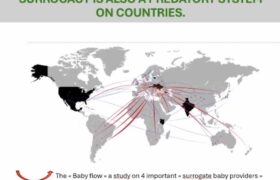
According to data provided by Tetyana Rudenko, the surrogacy industry is worth $14 billion as of 2022, and is projected to grow to $129 billion by 2032. Currently, there has been a surge in demand due to medical and social factors. Some countries have already banned surrogacy or are improving their by-laws, others are still in the process, some have banned it, including the inability to make such agreements abroad for their citizens; there are also case laws that regulate these relationships. According to her, in 2019, a whole network was exposed in Greece, which covered many countries: pregnant women were brought for illegal adoption, and their eggs were also removed. Surrogacy is one of the forms of multi-vector exploitation of women. The latest high-profile case is the capture of a group of women from Thailand for surrogacy, who were also forced to donate eggs. This group was transported through several countries to Georgia. Only one of the women managed to buy off the traffickers with the help of her relatives, and her testimony helped expose this network. The most progressive legislation in this regard is in Italy, which prohibits all types of surrogacy both domestically and abroad. After all, surrogacy practices do not protect the children themselves in any way. They do not have the right to reside, do not have the right to inheritance, etc. A court case in Italy did not hand over the child to the ordering parents, leaving it under the care of the state for further legal adoption by other people, arguing that the unethical nature of ordering a child as a commodity makes it impossible to hand over the child to such a family. The European court also determined in one of its verdicts that the state must have mechanisms for establishing a connection between the child and the surrogate mother, which, for example, does not exist in Ukraine where orphanages are already overflowing with these children. Traffickers deliberately seek out vulnerable women, including widows (which is especially actual during the war in Ukraine), single women, and there are also women who are forced to do this by their relatives. The woman does not have complete and correct information about what will happen to her, Also, after giving birth, she does not have any medical care – as in practices involving organ removal, no one is interested in the future fate of the donor, and the stereotypical attitude towards women as a mechanism for bearing a child is strengthened.
As gender expert Maria Dmytrieva added, surrogacy is actively promoted in Ukraine under the slogan “While there is war, it is cheaper there.” Interested parties directly declare that if Ukrainian women refuse to do it, they will bring women here from even poorer countries. There have already been cases when women were brought to Ukraine from Central Asian countries, and their fate after birth is unknown. That is, our country, in addition to being a country of origin for surrogacy practices, has also become a country of transit.
Marie Josèphe Devillers added that surrogacy is a form of violence against women. Ending this practice is part of the feminist agenda. Surrogacy is misogyny, it is violence and reproductive exploitation. First of all, it is a predation on women, but it is also a predation on their countries, it is a drain on medical resources, inequality between the customer and the woman who gives birth. This is the result of economic dependence, the subordinate position of the women involved in relation to the customers. The money received does not provide any stable financial improvement. In fact, the funds are displaced into dubious areas of activity. Even if surrogacy takes place within the country, even on an altruistic basis and within the same family – this always applies to the poorer and weaker. They always involve migrant women. Richer people do not want to risk their health and exploit the poor. In Ukraine, according to the announced data, about 2,000 thousand such children are born every year. “I was shocked to hear that in South Africa an entire surrogacy sector is growing while there are no basic medical services for citizens. Doctors who work in surrogacy are trained in the West, but they work for the interests of the parents-clients, not for the health of the women. In Kenya, the entire tourism industry is tied to surrogacy. When India first began restricting surrogacy practices in 2015, the Indian clinics simply moved to Kenya. In Africa, there is generally a lot of social pressure on women to give birth, while in Europe it is mostly a woman’s right,” said Marie Josèphe Devillers. She stated that the ban on surrogacy should happen in the same way as the ban on human trafficking, the ban on rape, this is an international node that must be condemned. This has already happened in Italy. In 2015, the European Parliament condemned surrogacy, and in 2024 the European Union added surrogacy to the list of crimes related to human trafficking.
As Dr. Sheela Suryanarayanan said, in 2021, India finally completely banned commercial surrogacy, but gaps in the law still remain. Until then, women from poorer countries were actively brought to India, but not because surrogacy was cheaper in this country, but because surrogate mothers had no rights to the child there. This is the main reason. If you legalize even some kind of surrogacy, it immediately opens the door to all illegal practices and phenomena. In all poor countries, this happens the same way. Customers paid money only when they picked up the child, and also refused if they didn’t like it for some reason. It was complete chaos. There is a case where a 13-year-old girl was kidnapped by traffickers, raped and forced to give birth six times. At that moment, surrogacy was legal, but under its cover, ordinary human trafficking was developing. And after the adoption of the law banning surrogacy, specialists from a private hospital in Delhi for “some reason” left their place and moved to the poorer province of West Bengal. Why there – after the surrogacy ban, women from Nepal were brought to this region, and the local authorities were not up to it because of their own problems. But still, the ban had a certain impact. Indeed, not a single woman was able to escape poverty thanks to the surrogacy fee. Furthermore, there was a stark contrast between the modern, shiny clinics and the barracks where surrogate mothers lived, and their reality, for example, of forced, selective abortions if the customers did not like the sex of the fetus. Many children born in this way die, more than in a healthy normal birth. But no one keeps statistics. In this case, mothers don’t have any payment either. This is a biomarket. There is no constitutional right as such to become biological parents, no one can force a more vulnerable person to go through all this to have their genetic child, so surrogacy should be banned.
As for the legislation of Ukraine, as noted by the Minister of Health of Ukraine in 2019–2020 Zoryana Skaletska, regarding surrogacy, we have two pages in the order document of the Ministry of Health and one article in the Family Code. Anyone who works in the public sector knows how many by-laws, orders, and instructions regulate all the nuances of any relationship. In surrogacy in Ukraine, this is not the case – two pages of an order and one article, that’s all. What can be done in Ukraine at this time is to remember that there is law and there is morality. If there are no, people are left alone with the laws of the market, where those who have money and profit can dictate. In Ukraine, there are more or less transparent clinics that maintain some kind of medical registration, but in general there are no registers of surrogacy in the state. There is no question of any informed consent, there is no legal clarity of the processes. There is no responsibility of medical institutions where this happens, there are only contracts with women and huge fines for them. The range of problems is terrible, and most importantly – the unclear status of the child. The woman’s body is treated as an incubator, and the child is not protected by anything at all. The child is chosen, as in a supermarket. “No document speaks of the interests of the child. According to the European Parliament directive of 2011, the use of surrogacy is exploitation, the object of the crime is the will and dignity of the person. Similarly, human dignity is the core of ethics. There is no ethical code in surrogacy practices, there are no ethical statements. The doctor is not responsible for anything in the future. The 1997 Oviedo Convention on Human Rights and Biomedicine has not been ratified by Ukraine! There must be no manipulation of a person’s body if it contradicts their dignity. In addition, a person has the right to withdraw informed consent – this is also not the case in surrogacy. Ethical principles regarding the child should be key for doctors, surrogacy practices are an example of dysfunctional law and ethics,” concluded Zoryana Skaletska. According to her, Ukraine has a terrible reputation in this regard; as the head of the Ministry of Health, she proposed changes, but they remained in the draft.
As Maria Dmytrieva added, the only mother a child knows is the woman who carried it. Everywhere there is an opportunity to give a born child to a surrogate mother, but in Ukraine this right is not available. There is already a whole movement of surrogate children in the world, who call for the banning of this inhuman practice as a violation of the rights of the child. Ukraine has already prepared legislation on surrogacy, it is impossible to find out what is written there. The project was discussed only with surrogacy clinics, neither women’s organizations nor children themselves were involved in its development. That is why traffickers hunt Ukrainian women: our legislation allows it.
The topics of discussion are part of Ukraine’s international obligations — in particular, the UN Convention on the Elimination of All Forms of Discrimination against Women (CEDAW), UN Security Council Resolution 1325 “Women, Peace, Security”, and are important in the context of adapting Ukrainian legislation to European Union norms and obligations to other international structures. These topics are becoming even more relevant in the context of full-scale war, increasing vulnerability of women, and increasing gender-based violence.
The events of the CSO “Democracy Development Center” are held as part of preparations for the development of a new State Targeted Social Program to Combat Human Trafficking for the period until 2025. We are convinced that hearing the voices of experts from different countries is critically important for the qualitative renewal of Ukrainian policy and taking into account both new challenges and innovations in international laws and norms in response to these challenges.
Video of the online discussion
Спеціальна доповідачка ООН з питань насильства проти жінок і дівчат Рім Аль-Салем
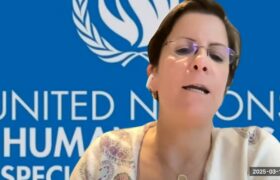
Спеціальна доповідачка ООН з питань насильства проти жінок і дівчат Рім Аль-Салем абсолютно переконана, що найкращою політикою щодо проституції є Нордична модель.
Відбулась експертна онлайн-дискусія «Сурогатне материнство в контексті протидії торгівлі людьми»
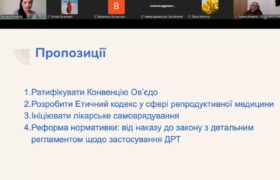
14 квітня 2025 року відбулась експертна онлайн-дискусія на тему «Сурогатне материнство в контексті протидії торгівлі людьми». Це перший захід із серії обговорень, організований ВГО «Центр “Розвиток демократії”» за ініціативи Міністерства соціальної політики України, у співпраці з Громадською радою при міжфракційному об’єднанні «Рівні можливості» Верховної Ради України, Національним агентством України з питань державної служби, Вищою школою публічного управління та за підтримки ООН Жінки в Україні. English
До заходу долучилися:
- Марія Дмитрієва, директорка програм, ВГО «Центр “Розвиток демократії”»;
- Оксана Пустова, державна експертка, Міністерство соціальної політики України;
- Юлія Гончар, програмна аналітикиня ООН Жінки з гендерно відповідального урядування;
- Юлія Лихач, директорка Вищої школи публічного управління;
- Олександра Новікова, Європейська мережа мігранток (ENoMW);
- Тетяна Руденко, старша керівниця проєктів, Офіс Спеціального представника та координатора ОБСЄ з протидії торгівлі людьми;
- Марі-Жозеф Девійє, представниця Міжнародної коаліції за заборону сурогатного материнства (ICASM), Франція;
- д-р Шіла Суріянараянан, доцентка Центру жіночих студій, Університет Хайдарабаду, Індія;
- Зоряна Скалецька, депутатка Київської міської ради, Міністерка охорони здоров’я України у 2019–2020 роках.
Тема сурогатного материнства в контексті протидії торгівлі людьми — непроста, але критична для захисту прав жінок, для осмислення нових форм експлуатації і для розробки адекватної політики на національному рівні. Важливо, що міжнародними партнерками заходу стали представниці Міжнародної коаліції за заборону сурогатного материнства (ICASM), Європейської мережі мігранток (ENoMW) та Міжнародної жіночої платформи дій (WOPAI). Також експертну підтримку заходу надали з Офісу Спеціального представника та координатора ОБСЄ з протидії торгівлі людьми.
Огляд ситуації із вразливістю українських жінок-мігранток у Європі, про небезпеку подібних комерційних пропозицій жінкам у нестабільному фінансовому стані зробила Олександра Новікова (Європейська мережа мігранток (ENoMW). У свою чергу, старша керівниця проєктів Офісу Спеціального представника та координатора ОБСЄ з протидії торгівлі людьми Тетяна Руденко, надала аналіз даних на тему «Сурогатне материнство та ризики торгівлі людьми: стратегічний підхід». Марі-Жозеф Девійє, представниця Міжнародної коаліції за заборону сурогатного материнства ICASM (Франція), також представила дослідження «Сурогатне материнство як хижацька система, спрямована на вразливих жінок. Новий розділ у торгівлі людьми». Про «Етичні виклики сурогатного материнства в Індії та подібності з Україною» розповіла д-р Шіла Суріянараянан, доцентка Центру жіночих студій, Університет Хайдарабаду (Індія). На тему «Правова визначеність та медична етика в сурогатному материнстві: між інструкцією і відповідальністю» надала експертні коментарі депутатка Київської міської ради, Міністерка охорони здоров’я України у 2019–2020 роках Зоряна Скалецька.
Зокрема, Олександра Новікова наголосила, що вона може стати голосом українських жінок-мігранток як однієї з найбільш вразливих груп, оскільки цю тему висвітлюють недостатньо, говорячи про сурогатне материнство. З її слів, кілька років тому вона сама отримала повідомлення від такої ж мігрантки, як вона сама, з пропозицією заробити. Йшлося про донорство яйцеклітин. У 2022 році було проведене дослідження, згідно з яким сурогатне материнство не є вибором жінки, тим більше мігранток, бо їх змушують, їм погрожують, ними маніпулюють. Обіцяють високу плату, підтримку. Це звучить реалістично, але далі жінки стають жертвами експлуатації, втрачають контроль над власним життям і свободою. Після російського вторгнення 2022 року багато жінок опинилися за кордоном, вони не одразу розуміли, що небезпека поруч, не орієнтувалися, що відбувається. Греція, де перебуває Олександра Новікова, весь час опиняється у центрі скандалів через сурогатні практики. У 2023 році на острові Крит виявили приватну клініку з професором медицини та з’ясувалося, що коли пряма плата за сурогатне материнство є забороненою, можна фінансувати донації яйцеклітин.
За даними, які навела Тетяна Руденко, індустрія сурогатного материнства станом на 2022 рік оперує 14 млрд доларів США, до 2032 року прогнозується зростання до 129 млрд. На даний час відбувся стрибок попиту через медичні та соціальні чинники. Деякі країни зараз вже заборонили сурогатне материнство або вдосконалюють підзаконні акти, інші ще в процесі, деякі заборонили включно з неможливістю укладати подібні угоди за кордоном для своїх громадян; також існують судові практики, які регулюють ці відносини. З її слів, у Греції у 2019 році викрили цілу мережу, яка охоплювала багато країн: жінок вагітними привозили на нелегальне усиновлення, в них також вилучали яйцеклітини. Сурогатне материнство – це одна з форм багатовекторної експлуатації жінок. Останній гучний випадок – захоплення у сурогатне материнство групи жінок з Таїланду, котрих також змушували віддавати яйцеклітини. Цю групу перевезли через кілька країн до Грузії. Лише одна з жінок спромоглася з допомогою родичів відкупитися від трафікерів, і її свідчення допомогли викрити цю мережу. Найбільш прогресивне у цьому плані законодавство Італії, яке забороняє будь-які види сурогації як всередині країни, так і за кордоном. Адже сурогатні практики ніяк не захищають власне дітей. Вони не мають права проживання, не мають права на спадщину тощо. Суд в Італії не передав дитину батькам-замовникам, лишивши її під опікою держави для подальшого законного всиновлення іншими людьми, з аргументацією, що неетичність замовлення дитини як товару робить неможливим передачу дитину такій сім’ї. Також європейський суд в одному з вердиктів визначив, що держава обов’язково повинна мати механізми встановлення зв’язку між дитиною і сурогатною матір’ю, чого, наприклад, немає в Україні, де сиротинці переповнені такими дітьми.
Трафікери свідомо шукають вразливих жінок, зокрема вдів (що актуально в час війни в Україні), самотніх жінок, є і такі жінки, яких до цього змушують родичі. Жінка не має повної коректної інформації щодо того, що з нею буде, також після пологів вона не має ніякої медичної допомоги – як у практиках з вилученням органів, подальша доля донора нікому не цікава, а до жінки посилюється стереотипне ставлення як до механізму для виношування дитини.
Як додала гендерна експертка Марія Дмитрієва, під гаслом «Поки тут війна, тут дешево» сурогатне материнство активно просувають в Україні. Зацікавлені сторони прямо заявляють, що якщо це відмовляться робити українки, сюди повезуть жінок із ще бідніших держав. Вже є випадки, коли в Україну завозили жінок із країн Середньої Азії, подальша їхня доля після народження невідома. Тобто наша держава крім того, що була країною походження сурогатних практик, стала ще країною транзиту.
Марі-Жозеф Девійє додала, що сурогатне материнство є однією з форм насильства над жінками. Припинення цієї практики є частиною феміністичного порядку денного. Сурогація – це мізогінія, це насильство і репродуктивна експлуатація. Передусім це хижацтво щодо жінок, але також це і хижацтво проти їхніх країн, це проїдання медичного ресурсу, нерівність між замовником і жінкою, яка народжує. Це результат економічної залежності, підлеглого становища задіяних жінок щодо замовників. Ніякого стабільного фінансового покращення отримані гроші не дають. Насправді кошти витісняються у сумнівні сфери діяльності. Навіть якщо сурогація відбувається усередині країни, навіть на альтруїстичних засадах і в межах однієї родини – це застосовується завжди щодо бідніших і слабших. Завжди залучають мігранток. Більш багаті люди не хочуть ризикувати своїм здоров’ям і експлуатують бідних. В Україні, за озвученими даними, щороку народжують біля 2000 тисяч таких дітей. «Я була шокована, почувши, що у Південній Африці росте цілий сектор сурогатного материнства, а для громадян в них немає базових медичних послуг. Лікарів, які працюють у сурогації, вчать на Заході, але вони працюють на інтереси батьків-замовників, а не для здоров’я жінок. В Кенії вся індустрія туризму прив’язана до сурогатного материнства. Коли в Індії у 2015 році почали вперше обмежувати сурогатні практики, тамтешні клініки просто перебралися в Кенію. В Африці взагалі великий тиск на жінку, щоб вона обов’язково народила, тоді як в Європі це переважно право жінки», – розповіла Марі-Жозеф Девійє.
Вона констатувала, що заборона сурогації має відбутися так само, як заборона торгівлі людьми, заборона зґвалтування, це міжнародний спрут, який має бути засуджений. Це вже відбулося в Італії. У 2015 році Європарламент засудив сурогатне материнство, також Євросоюз у 2024 році додав сурогатне материнство до переліку злочинів, пов’язаних з торгівлею людьми.
Як розповіла д-р Шіла Суріянараянан, у 2021 році Індія остаточно повністю заборонила комерційну сурогацію, але прогалини у законодавстві ще лишаються. До того часу до Індії активно привозили жінок з бідніших країн, але не тому, що сурогатне материнство було в цій країні дешевшим, а тому, що сурогатні матері не мали тут ніяких прав на дитину. Це основна причина. Якщо легалізувати хоч якийсь вид сурогатного материнства, це одразу відчиняє грата для всіх незаконних практик та явищ. У всіх бідних країнах це відбувається однаково. Замовники платили гроші тільки при забиранні дитини, також відмовлялися, якщо вона їм чимсь не подобалося. Це був повний хаос. Є випадок, коли 13-річну дівчину викрали трафікери, гвалтували її і шість разів вона примусово народила. При цьому сурогатне материнство було в цей час легальним, але під його прикриттям розвивалася звичайна торгівля людьми. А після прийняття закону про заборону сурогації фахівці з приватної лікарні з Делі чомусь знялися з місця і перебралися в біднішу провінцію Західну Бенгалію. Чому туди – в цей край після заборони сурогації почали везти жінок з Непалу, а місцевій владі було не до того через свої проблеми. Але все ж таки певний вплив заборона мала. Дійсно, з бідності завдяки сурогатному гонорару не вибилася жодна жінка. Окрім того, була разюча відмінність між сучасними блискучими клініками та бараками, в яких жили сурогатні матері, між їхньою реальністю, наприклад, примусовими селективними абортами, якщо замовникам не підходила стать плоду. Багато дітей, народжених таким чином, помирає, більше, ніж у здоровому звичайному народженні. Але статистику ніхто не веде. У такому випадку і матері нічого не платять. Це біоринок. Немає як такого конституційного права людини обов’язково стати біологічними батьками, ніхто не може змушувати більш вразливу людину проходити це все, щоб отримати свою генетичну дитину, тому сурогатне материнство має бути заборонене.
Що стосується законодавства України, то, як зазначила Міністерка охорони здоров’я України у 2019–2020 роках Зоряна Скалецька, щодо сурогатного материнства ми маємо дві сторінки у наказі МОЗ та одну статтю у Сімейному кодексі. Будь-хто, хто працює в державній сфері, знає, як багато підзаконних актів, наказів, інструкцій регулюють всі нюанси будь-яких відносин. В сурогатному материнстві в Україні цього немає – дві сторінки наказу і одна стаття, на цьому все. Що при цьому можна зробити в Україні – згадати, що є право і є мораль. Якщо цього немає – люди лишаються наодинці із законами ринку, де диктують ті, хто має гроші і зиск. В Україні є більш-менш прозорі клініки, які ведуть якусь медичну реєстрацію, однак в цілому ніяких реєстрів щодо сурогації в державі нема. Ні про яку інформовану згоду не йдеться, немає юридичної ясності процесів. Відповідальності медичних закладів, де це відбувається, немає, є лише договори з жінками і величезні штрафи для них. Спектр проблем жахливий, а головне – неясний статус дитини. Тіло жінки трактується як інкубатор, а дитина не захищена взагалі нічим. Її вибирають, як у супермаркеті. «У жодному документі не йдеться про інтереси дитини. Згідно з директивою Європарламенту від 2011 року, використання сурогатного материнства є експлуатацією, об’єктом злочину є воля та гідність людини. Так само гідність людини є ядром етики. В сурогатних практиках немає етичного кодексу, відсутні етичні положення. Лікар взагалі ні за що не відповідає у подальшому. Конвенція Ов’єдо 1997 року про права людини і біомедицину не ратифікована Україною! Не може бути жодних маніпуляцій з тілом людини, якщо це суперечить її гідності. Крім того, людина має право відкликати інформовану згоду – в сурогації цього також немає. Ключовими для лікарів мають бути етичні засади щодо дитини, сурогатні практики є прикладом дисфункціональності права та етики», – підсумувала Зоряна Скалецька. З її слів, Україна має у цьому відношенні жахливу репутацію, будучи очільницею МОЗ, вона пропонувала зміни, однак вони лишилися у проєкті.
Як додала Марія Дмитрієва, єдиною мамою, яку знає дитина, є жінка, котра її виношувала. Скрізь є можливість віддати народжену дитину сурогатній матері, а в Україні цього права нема. У світі вже є цілий рух сурогатних дітей, які закликають заборонити цю нелюдську практику як порушення прав дитини. В Україні вже підготували законодавство про сурогатне материнство, дізнатися, що там написали, неможливо. Проєкт обговорювали лише з сурогатними клініками, до його розробки не залучили ані жіночі організації, ані дітей. Тому на українок і полюють трафікери: це дозволяє наше законодавство.
Теми обговорення є частиною міжнародних зобов’язань України — зокрема, Конвенції ООН про ліквідацію всіх форм дискримінації щодо жінок (CEDAW), Резолюції Ради Безпеки ООН 1325 “Жінки, мир, безпека”, і є важливими у контексті адаптації українського законодавства до норм Європейського Союзу та зобов’язань перед іншими міжнародними структурами. Ці теми набувають ще більшої актуальності в умовах повномасштабної війни, зростання вразливості жінок і посилення гендерно зумовленого насильства.
Заходи ВГО «Центр “Розвиток демократії”» проводяться в рамках підготовки до розробки нової Державної цільової соціальної програми протидії торгівлі людьми на період до 2025. Ми переконані, що почути голоси експерток із різних країн — це критично важливо для якісного оновлення української політики і врахування як нових викликів, так і нововведень в міжнародних законах і нормах у відповідь на ці виклики.
Відео онлайн-дискусії 14 квітня 2025 року
Information Campaigns of the CSO DDC on the Approval of the Model of Equality and Overcoming Violence against Women
On November-December, 2024, a cycle of webinars was organized by the CSO “Democracy Development Center”, the Public Council of IFU “Equal Opportunities”, and the Ministry of Social Policy of Ukraine within the framework of the “16 days against gender-based violence” campaign.
Challenges to safety and security of women and girls in digital environment were discussed during the webinar “AI’s Risks to Women’s Rights: Addressing Challenges and Seeking Solutions” on November 27, 2024.
Experts were involved to the following topics to discuss:
- Challenges to Safety and Security of Women and girls in Digital Environment – Tatiana Kotlyarenko, international expert, the US, former OSCE ODIHR Advisor on Anti-Human Trafficking Issues;
- Combatting Tech-Facilitated Gender-Based Violence: Championing Global Responses for Local Impact – Tsitsi Matekaire, the Global Lead for Ending Sexual Exploitation at Equality Now, UK;
- Deepfake Technology and Sexual Exploitation – Shandra Woworuntu, Founder and CEO, NGO Mentari Human Trafficking Survivor Empowerment Program, the US;
- Identifying the challenges and solutions for tackling online Violence Against Women and Girls in Ukraine – Mandy Sanghera, international human rights activist, UK;
- AI in Surveillance and Privacy: Threats to Women’s Safety – Yorke Rhodes III, Ethical Tech Colab at NYU SPS Center for Global Affairs;
- Social Media Algorithms and Online Harassment – Dr. Eirliani Abdul Rahman, Senior Fellow, Georgetown University; Research Affiliate, Minderoo Centre for Tech & Democracy, University of Cambridge;
- Responsible Generative AI for Good: Leveraging Generative AI to Address Severe Social Issues Such as Violence Against Women – Shiran Melamdovsky – Somech, Generative AI for Good, AI Impact Leader, Israel;
- The Ukrainian Context: AI’s Impact on Women, Girls, and Boys in Conflict and Reconstruction – Anastasia Dyakova, NGO “Center for Internet Safety ‘Stop Sexting’”.
- http://surl.li/sotdya
- http://surl.li/yudssv
- https://www.facebook.com/events/1115632690567970/
- https://www.facebook.com/permalink.php?story_fbid=pfbid028quEhC4iUxQcru7csU3zT2jQfQ1GjomG4Me8oPJ67ufqtmQS6yYuJKE8WMx27SrHl&id=100008408411455
- https://www.facebook.com/vgocdd/posts/pfbid0tpHYoKHk8b6HYXmYV3U8sxgF7uPMFXcjMN5RQ8EgSQcKkaQLYpVoHGRzchfcaqGVl
On December 2, 2024, a webinar “Prostitution as Violence against Women and Best Global Practices for Counteraction” was held. The discussion focused on combating involvement in prostitution during the wartime, as well as the threats of increasing involvement of refugee women in prostitution due to the lack of support after leaving abroad (using the example of Bulgaria). The issues of changing legislation, the importance of introducing a model of equality (the Nordic model), and working with victims of involvement in human trafficking were mentioned.
The event was held with the participation of:
• Olena Zaitseva, Ukrainian expert, NGO “Women in Defense”
• Yulia Dorokhova, Head of the Charitable Organization “All-Ukrainian League “Legalife””
• Ivanna Khodos, Bulgarian branch of the Charitable Organization “All-Ukrainian League “Legalife””, Ukraine
• Hema Sibi, Advocacy Coordination, CAP, France
• Drisha Fernandez, NGO Beehive, Colombia
• Luba Fein, organization “Voices of Israeli Sex Trade Survivers”, Israel,
• National Police of Ukraine.
- http://ddc.org.ua/%d1%83%d0%ba%d1%80%d0%b0%d1%97%d0%bd%d1%81%d1%8c%d0%ba%d1%96-%d1%82%d0%b0-%d0%bc%d1%96%d0%b6%d0%bd%d0%b0%d1%80%d0%be%d0%b4%d0%bd%d1%96-%d0%b5%d0%ba%d1%81%d0%bf%d0%b5%d1%80%d1%82%d0%ba%d0%b8-%d0%b2/
- http://ddc.org.ua/ukrainian-and-international-experts-took-part-in-the-webinar-prostitution-as-violence-against-women-and-the-best-global-practices-for-counteraction-organized-by-the-ngo-ddc/
- https://www.facebook.com/permalink.php?story_fbid=pfbid0Gq4advo58dJdtXeZmcF7cpPdvz2Yr8dnSJHRfXJviUGorQBQpyQc9rswGTWGWsoCl&id=100008408411455
- https://www.facebook.com/permalink.php?story_fbid=pfbid02Ks7EFQXcEL8TQGgVsciZeSwZgag6AdqgirTjpdz3CEYdFhQbcyp1BnRuWjSxLnX6l&id=100008408411455
- https://www.facebook.com/ivagps/posts/pfbid02UC311by1UsXhfdqxGsU1i8p1KUqr6a5sR6bcwrjonhBTuLnk5go3XYK2zcQTgQoYl
- https://www.facebook.com/permalink.php?story_fbid=pfbid037ux67rKtSNJ63sUtZsHe8keghYsEnTEcw6b88XNzpANxm4NbEdibvEhW58dcMb64l&id=100008408411455
- https://www.facebook.com/vgocdd/posts/pfbid0wPaP6N1fDAacTjnhLW4nRka5GiNgpeKLfsWb8hfzScnQih3ZsfUSvqfsonCUaLmhl
- https://www.facebook.com/groups/feminism.ua/posts/9236034606427496/
- https://www.facebook.com/permalink.php?story_fbid=pfbid08kYwqid2GLsnaaSuxaaECqoUFM4vcu9C3VVzFEtyYV997ohRdBE6pBLNeDpkoPaTl&id=100008408411455
On December 5, 2024, the webinar “Pornography: A Danger for Women and Children” was held. At the beginning of the discussion, the head of the Public Council on Gender Issues at the “Equal Opportunities” IFU, Larysa Kobelyanska, noted that about 1,000 people had registered for the event, and no topic had gathered such a large number of people before, because the topics chosen for the events of this year’s campaign against gender-based violence are extremely important and painful.
Experts were commenting the following topics to discuss:
- Tatiana Kotlyarenko, international expert, the US, former OSCE ODIHR Advisor on Anti-Human Trafficking Issues;
- Yurii Hanushchak, Police Colonel, Head of the 3rd Department (Coordination of Activities) of the Department of International Police Cooperation (DIPC), National Police of Ukraine;
- Anna Zobnina, European Network of Migrant Women;
- Olena Zaitseva, expert, lawyer in international law, Ukraine;
- “Pornography as torture”, Linda McDonald and Jeanne Searson, women’s rights activists, Canada
- “OnlyFans and its dangers”, Julie Bindel, journalist, the UK
- “Pornography is prostitution with a camera”, Melissa Farley, Ph.D., Executive Director, Prostitution Research & Education, US
- https://www.facebook.com/events/1620628115510950/
- https://www.facebook.com/EOCcouncil/videos/888806886749930
- https://www.facebook.com/permalink.php?story_fbid=pfbid02uWN8pUNsQp16HvRXVY4UxEfhHagjonAYnfSnjZJEWxtRh9Jy7uCcvsRVHgv7ssdtl&id=100008408411455
- https://www.facebook.com/permalink.php?story_fbid=pfbid0FJ4F5zKrM8prEMfBePheBqYvzMiBEqxtVszoFMf61AZZD7JaiMMUhfNBX8pXCwzjl&id=100008408411455
- https://www.facebook.com/vgocdd/posts/pfbid0sLSuMFhzGf7aC2vBsyRsroTMEaFj3hrzZpU4164tBRyEyGsRpMQx8FL9bguHFw7cl
- https://www.facebook.com/permalink.php?story_fbid=pfbid023nnJgTziaUcWPoSXJbRLrF8daMJH5t6TWqMHyLhz9ZiPBL6EMqabG23uGyxXSxPGl&id=100008408411455
- https://www.facebook.com/groups/feminism.ua/permalink/9322184707812485
- https://www.facebook.com/vgocdd/posts/pfbid02vBa7FEKxhFo7cYBfDm7MUPjucDvtQGYGee5WT1x2Mi2i5fZ2boKBAVHrZ8CWZ7HNl
- https://www.facebook.com/permalink.php?story_fbid=pfbid0C7GoP5KBYmuxJZGX84SrP72xykZwyG6Dd7rmZTgdwPWXT5ZdhWE6H1eJ1EwGHFQWl&id=100008408411455
- https://www.facebook.com/vgocdd/posts/pfbid0UUkDV4ynnufjTZMUD3QecMi5ox2b3nyk8TvxmPdt7HED1yNiW9P3yugZdFCfMpJgl
- https://www.facebook.com/permalink.php?story_fbid=pfbid0edpv5CaXn2dCQQzGpiJqAjoe14CV5EXCj3bszkRajKzpMbwV6itpGSA3xF9Q3GEpl&id=100008408411455
- https://www.youtube.com/watch?v=XlBvDwiNeOA
- http://ddc.org.ua/%d0%b2%d0%b5%d0%b1%d1%96%d0%bd%d0%b0%d1%80-%d0%bf%d0%be%d1%80%d0%bd%d0%be%d0%b3%d1%80%d0%b0%d1%84%d1%96%d1%8f-%d0%bd%d0%b5%d0%b1%d0%b5%d0%b7%d0%bf%d0%b5%d0%ba%d0%b0-%d0%b4%d0%bb%d1%8f-%d0%b6/
- http://ddc.org.ua/webinar-pornography-a-dander-to-women-and-children/
On December 11, 2024, the webinar “Youth Advocacy Campaigns. We are implementing the resolutions of the UN Security Council “Youth, peace and security” and “Women, peace and security” was held. The event was organized to summarize the work of young people during the year and within the framework of the “16 days against gender-based violence” campaign, their participation in the decision-making process to defend the rights and opportunities of children and young people at the level of cities and villages of their communities.
- https://www.facebook.com/events/890262386629691
- https://www.facebook.com/EOCcouncil/videos/1070489191478302
- https://www.facebook.com/permalink.php?story_fbid=pfbid02Yekgsiw6ngZ4a9kU4rxVc5vh28hHs6SHH8KhvHpFqiktx4LPQX7kFe4GZBXWEKUnl&id=100008408411455
- https://www.facebook.com/permalink.php?story_fbid=pfbid0t8kd6RMXjtsb5y7xPMbx8w7FaCEk8HFDTGk6hxkoQFYP4zfz6yM49aagPHsbpmKyl&id=100008408411455
- https://www.facebook.com/vgocdd/posts/pfbid02m9N3DfErMsjk6Qwn3UZ9TMV1Um6Zyp2zyh9yVNthHrr3BxC4EvxihVvGCSV2x96pl
- https://www.facebook.com/permalink.php?story_fbid=pfbid02vkfR77HsfjDgxr5wwk4m7CxJTmix3WYbTjnAfFi2FHibvd8nqR63wnjvvbhFyDVcl&id=100008408411455
- https://www.facebook.com/vgocdd/posts/pfbid0FFSFLMrMufd484zjj36ii8YSSjYDumFxwZLFjTsVp2JUdQrMkN4r3qvrDe3mXQY8l
- http://surl.li/xnxsvr
- http://surl.li/uihgkh
On December 13, 2024, the webinar ”Surrogacy: Ethical Challenges” was held. Opening the webinar, the head of the Public Council, Larysa Kobelyanska, stated that surrogacy is a complex and very urgent ethical, medical, and legal problem. It is very sensitive and painful, as well as harassment of women, sexual exploitation in general. International and national experts were invited to the webinar to discuss the problem of surrogacy.
At the invitation of the organizers, the following experts took part in the webinar:
- Marie-Josèphe Devillers, ICASM International Coalition for the Abolition of Surrogate Motherhood;
- Taina Bien Aime, Executive Director of the Coalition Against Trafficking in Women and a founding member of Equality Now;
- ‘Physical and Social Harms of surrogacy on Women and Children in India’ – Dr. Sheela Suryanarayanan, Associate Professor, Centre for Women’s Studies, University of Hyderabad, India;
- Lindita Pano, activist for children’s rights, Albania;
- Zoryana Skaletska, Kyiv City Council member, Minister of Health of Ukraine in 2019-2020.
- https://www.facebook.com/maria.dmytriyeva/videos/8501045523356082/
- https://www.facebook.com/EOCcouncil/videos/1301567060848109
- https://www.facebook.com/events/1771864076949269
- https://www.facebook.com/permalink.php?story_fbid=pfbid02i2HxXdtX8BS1zoKRmmr3vU4MWSQkoNBgK9SkktCsxCoPZFhbB9HUTWgCz3Gv1nFJl&id=100008408411455
- https://www.facebook.com/permalink.php?story_fbid=pfbid0VpBH4wHWCtG39eBYFmuVyyWd2z9WUJ8sMWnCcEnKhij7T48YbFvjzhKFReJyS62Ql&id=100008408411455
- https://www.facebook.com/groups/feminism.ua/permalink/9345451435485812
- https://www.facebook.com/vgocdd/posts/pfbid02CB6ZV82dok1HeMbELwGFRQyaL6UYB3g5T45VUre8vf5kcTcbizwfLTx2zvoLGwStl
- https://www.facebook.com/permalink.php?story_fbid=pfbid0TNkUuFGG8R5KUobu7ajm9nJyLV6bc9b7HH7fox3QQ9PuZY9su8ZXBK8wynEszDcZl&id=100008408411455
- https://www.facebook.com/vgocdd/posts/pfbid0rNCvP4DZMmZ1DQkeUqUgaYQ7Tt9wjeTBgwcwoANA1rZ4qYwrtsuFP7ShTrNmBnSul
- https://www.facebook.com/permalink.php?story_fbid=pfbid02WvW455vbamUafGqFzcCxS55TMpSvyxxzq42ZkntL6UpJKzxgD994oAFPGd8uu2mcl&id=100008408411455
- https://www.facebook.com/vgocdd/posts/pfbid021RWMftVWpPZqu1FtHyxpHo2PtRPNGQf5SkfEyp6Rivq7YEBX63QLAiJoMrCTSkeUl
- http://ddc.org.ua/%d0%b2%d0%b5%d0%b1%d1%96%d0%bd%d0%b0%d1%80-%d1%81%d1%83%d1%80%d0%be%d0%b3%d0%b0%d1%82%d0%bd%d0%b5-%d0%b2%d0%b8%d0%bd%d0%be%d1%88%d1%83%d0%b2%d0%b0%d0%bd%d0%bd%d1%8f-%d0%b5%d1%82%d0%b8%d1%87/
- http://ddc.org.ua/webinar-surrogacy-ethical-challenges/
The CSO “Center for Democracy Development” implemented an information campaign “What is an Equality Model” (materials are available at links: 1, 2, 3, 4, 5, 6).
The CSO “Democracy Development Center” in Х: https://x.com/j0Kq7ZdrkxdJcQd
Video topics:
Webinar “Prostitution as Violence against Women and Best Global Practices for Counteraction”, 02.12.2024
Webinar “AI’s Risks to Women’s Rights: Addressing Challenges and Seeking Solutions”, 27.11.2024
Webinar “Prostitution as a Problem of Public Health”
Webinar “Legislation: best practices for implementing the Equality Model”
Webinar “Model of Equality, “Women. Peace. Security” Agenda”
Webinar “Expert Discussion “Equality Model and Law Enforcement Agencies””
Webinar “Breaking out of the Cycle of Violence: the Experience of Prostitution Survivors”
Інформаційні кампанії НУО ЦРД щодо прийняття Моделі рівності та подолання насильства проти жінок
НУО «Центр – Розвиток демократії» разом з Громадською радою з гендерних питань та Міністерством соціальної політики України провели серію вебінарів в рамках кампанії «16 днів проти гендерного насильства» у листопаді-грудні 2024 року. Заходи транслювалися на сторінці Громадської ради з гендерних питань у Фейсбук, до участі у п’яти вебінарах зареєструвалися понад 850 осіб.
Виклики безпеці та охороні жінок та дівчат у цифровому середовищі обговорювались під час вебінару «Загрози правам жінок через ШІ: подолання викликів та пошук рішень». Захід був організований НУО «Центр – Розвиток демократії» та Громадською радою з гендерних питань (Україна) 27 листопада 2024 року.
Експерти й експертки були залучені до наступних тем обговорення:
- Виклики безпеці та охороні жінок та дівчат у цифровому середовищі – Тетяна Котляренко, міжнародна експертка зі США, колишня радниця БДІПЛ ОБСЄ з питань боротьби з торгівлею людьми;
- Боротьба з технічним насильством за гендерною ознакою: сприяння глобальним реагуванням для локального впливу – Цітсі Матекайр, лідерка з припинення сексуальної експлуатації, Equality Now, Великобританія;
- Технологія Deepfake і сексуальна експлуатація – Шандра Воворунту, засновниця і генеральна директорка НУО Ментарі Програма посилення осіб, які врятувалися з торгівлі людьми, США;
- Визначення викликів і рішень для боротьби з насильством в Інтернеті щодо жінок і дівчат в Україні – Менді Сангера, міжнародна правозахисниця, Великобританія;
- ШІ у нагляді та конфіденційності: загрози безпеці жінок – Йорк Роудс, професор, Етична технічна колаборація при Центрі глобальних справ школи професійних студій Нью-Йоркського університету (NYU SPS, США);
- Алгоритми соціальних мереж і переслідування в Інтернеті – Д-р Ейрліані Абдул Рахман, старша наукова співробітниця Джорджтаунського університету, наукова партнерка Центру технологій і демократії Міндеру, Кембриджський університет;
- Відповідальний генеративний ШІ на благо: використання генеративного ШІ для вирішення серйозних соціальних проблем, таких як насильство щодо жінок – Шіран Меламдовськи-Сомех, експертка зі впливу штучного інтелекту, Generative AI for Good, Ізраїль;
- Український контекст: вплив штучного інтелекту на жінок, дівчат і хлопців у конфлікті та відбудові – Анастасія Дьякова, ГО «Центр захищеності в Інтернеті ‘Стоп Секстінг’», Україна.
- http://surl.li/sotdya
- http://surl.li/yudssv
- https://www.facebook.com/events/1115632690567970/
- https://www.facebook.com/permalink.php?story_fbid=pfbid028quEhC4iUxQcru7csU3zT2jQfQ1GjomG4Me8oPJ67ufqtmQS6yYuJKE8WMx27SrHl&id=100008408411455
- https://www.facebook.com/vgocdd/posts/pfbid0tpHYoKHk8b6HYXmYV3U8sxgF7uPMFXcjMN5RQ8EgSQcKkaQLYpVoHGRzchfcaqGVl
2 грудня 2024 року відбувся вебінар на тему «Проституція як насильство проти жінок і кращі світові практики протидії». Під час обговорення йшлося про протидію залученню до проституції в умовах війни, а також про загрози того, що зростає залучення жінок-біженок до проституції через відсутність підтримки після виїзду за кордон (на прикладі Болгарії). Були згадані питання зміни законодавства, важливість запровадження моделі рівності, роботи з жертвами залучення до торгівлі людьми.
Участь у заході взяли:
- Олена Зайцева, українська експертка, ГО «Жінки в обороні»;
- Юлія Дорохова, директорка Благодійної організації «Всеукраїнська ліга “Легалайф”»;
- Іванна Ходос, болгарське відділення Благодійної організації «Всеукраїнська ліга “Легалайф”», Україна;
- Хема Сібі, координаторка з адвокації, САР, Франція;
- Дріша Фернандес, ГО Beehive, Колумбія;
- Люба Фейн, організація «Голоси ізраїльських жінок, які пережили секс-індустрію», Ізраїль;
- Національна поліція України;
- Модераторка, гендерна експертка НУО «Центр – Розвиток демократії» Марія Дмитрієва.
- http://ddc.org.ua/%d1%83%d0%ba%d1%80%d0%b0%d1%97%d0%bd%d1%81%d1%8c%d0%ba%d1%96-%d1%82%d0%b0-%d0%bc%d1%96%d0%b6%d0%bd%d0%b0%d1%80%d0%be%d0%b4%d0%bd%d1%96-%d0%b5%d0%ba%d1%81%d0%bf%d0%b5%d1%80%d1%82%d0%ba%d0%b8-%d0%b2/
- http://ddc.org.ua/ukrainian-and-international-experts-took-part-in-the-webinar-prostitution-as-violence-against-women-and-the-best-global-practices-for-counteraction-organized-by-the-ngo-ddc/
- https://www.facebook.com/permalink.php?story_fbid=pfbid0Gq4advo58dJdtXeZmcF7cpPdvz2Yr8dnSJHRfXJviUGorQBQpyQc9rswGTWGWsoCl&id=100008408411455
- https://www.facebook.com/permalink.php?story_fbid=pfbid02Ks7EFQXcEL8TQGgVsciZeSwZgag6AdqgirTjpdz3CEYdFhQbcyp1BnRuWjSxLnX6l&id=100008408411455
- https://www.facebook.com/ivagps/posts/pfbid02UC311by1UsXhfdqxGsU1i8p1KUqr6a5sR6bcwrjonhBTuLnk5go3XYK2zcQTgQoYl
- https://www.facebook.com/permalink.php?story_fbid=pfbid037ux67rKtSNJ63sUtZsHe8keghYsEnTEcw6b88XNzpANxm4NbEdibvEhW58dcMb64l&id=100008408411455
- https://www.facebook.com/vgocdd/posts/pfbid0wPaP6N1fDAacTjnhLW4nRka5GiNgpeKLfsWb8hfzScnQih3ZsfUSvqfsonCUaLmhl
- https://www.facebook.com/groups/feminism.ua/posts/9236034606427496/
- https://www.facebook.com/permalink.php?story_fbid=pfbid08kYwqid2GLsnaaSuxaaECqoUFM4vcu9C3VVzFEtyYV997ohRdBE6pBLNeDpkoPaTl&id=100008408411455
5 грудня 2024 року відбувся вебінар “Порнографія: небезпека для жінок та дітей”. Захід був організований НУО «Центр – Розвиток демократії», Міністерством соціальної політики та Громадською радою з гендерних питань (Україна).
Експерти й експертки коментували наступні теми до обговорення:
- Тетяна Котляренко, міжнародна експертка зі США, колишня радниця БДІПЛ ОБСЄ з питань боротьби з торгівлею людьми;
- Юрій Ганущак, полковник поліції, начальник 3-го відділу (координації діяльності) Департаменту міжнародного поліцейського співробітництва (ДМПС) Національної поліції України;
- Анна Зобніна, стратегічна та виконавча директорка Європейської мережі жінок-мігранток;
- Олена Зайцева, експертка, юристка з міжнародного права, Україна;
- «Порнографія як катування» – Лінда Макдональд і Жанна Сарсон, активістки за права жінок, Канада;
- «OnlyFans і його небезпека» – Джулі Біндел, журналістка, Великобританія;
- «Порнографія – це проституція з камерою» – Мелісса Фарлі, докторка філософії, виконавча директорка організації «Дослідження та освіта щодо проституції», США.
- https://www.facebook.com/events/1620628115510950/
- https://www.facebook.com/EOCcouncil/videos/888806886749930
- https://www.facebook.com/permalink.php?story_fbid=pfbid02uWN8pUNsQp16HvRXVY4UxEfhHagjonAYnfSnjZJEWxtRh9Jy7uCcvsRVHgv7ssdtl&id=100008408411455
- https://www.facebook.com/permalink.php?story_fbid=pfbid0FJ4F5zKrM8prEMfBePheBqYvzMiBEqxtVszoFMf61AZZD7JaiMMUhfNBX8pXCwzjl&id=100008408411455
- https://www.facebook.com/vgocdd/posts/pfbid0sLSuMFhzGf7aC2vBsyRsroTMEaFj3hrzZpU4164tBRyEyGsRpMQx8FL9bguHFw7cl
- https://www.facebook.com/permalink.php?story_fbid=pfbid023nnJgTziaUcWPoSXJbRLrF8daMJH5t6TWqMHyLhz9ZiPBL6EMqabG23uGyxXSxPGl&id=100008408411455
- https://www.facebook.com/groups/feminism.ua/permalink/9322184707812485
- https://www.facebook.com/vgocdd/posts/pfbid02vBa7FEKxhFo7cYBfDm7MUPjucDvtQGYGee5WT1x2Mi2i5fZ2boKBAVHrZ8CWZ7HNl
- https://www.facebook.com/permalink.php?story_fbid=pfbid0C7GoP5KBYmuxJZGX84SrP72xykZwyG6Dd7rmZTgdwPWXT5ZdhWE6H1eJ1EwGHFQWl&id=100008408411455
- https://www.facebook.com/vgocdd/posts/pfbid0UUkDV4ynnufjTZMUD3QecMi5ox2b3nyk8TvxmPdt7HED1yNiW9P3yugZdFCfMpJgl
- https://www.facebook.com/permalink.php?story_fbid=pfbid0edpv5CaXn2dCQQzGpiJqAjoe14CV5EXCj3bszkRajKzpMbwV6itpGSA3xF9Q3GEpl&id=100008408411455
- https://www.youtube.com/watch?v=XlBvDwiNeOA
- http://ddc.org.ua/%d0%b2%d0%b5%d0%b1%d1%96%d0%bd%d0%b0%d1%80-%d0%bf%d0%be%d1%80%d0%bd%d0%be%d0%b3%d1%80%d0%b0%d1%84%d1%96%d1%8f-%d0%bd%d0%b5%d0%b1%d0%b5%d0%b7%d0%bf%d0%b5%d0%ba%d0%b0-%d0%b4%d0%bb%d1%8f-%d0%b6/
- http://ddc.org.ua/webinar-pornography-a-dander-to-women-and-children/
11 грудня 2024 року відбувся вебінар «Адвокаційні кампанії молоді. Впроваджуємо в життя резолюції Ради Безпеки ООН “Молодь, мир та безпека” та “Жінки, мир та безпека”». Захід був організованийдля підсумування роботи молоді протягом року та в межах кампанії «16 днів проти гендерного насильства», їхньої участі у процесі прийняття рішень для відстоювання прав та можливостей дітей і молоді на рівні міст і сіл своїх громад.
- https://www.facebook.com/events/890262386629691
- https://www.facebook.com/EOCcouncil/videos/1070489191478302
- https://www.facebook.com/permalink.php?story_fbid=pfbid02Yekgsiw6ngZ4a9kU4rxVc5vh28hHs6SHH8KhvHpFqiktx4LPQX7kFe4GZBXWEKUnl&id=100008408411455
- https://www.facebook.com/permalink.php?story_fbid=pfbid0t8kd6RMXjtsb5y7xPMbx8w7FaCEk8HFDTGk6hxkoQFYP4zfz6yM49aagPHsbpmKyl&id=100008408411455
- https://www.facebook.com/vgocdd/posts/pfbid02m9N3DfErMsjk6Qwn3UZ9TMV1Um6Zyp2zyh9yVNthHrr3BxC4EvxihVvGCSV2x96pl
- https://www.facebook.com/permalink.php?story_fbid=pfbid02vkfR77HsfjDgxr5wwk4m7CxJTmix3WYbTjnAfFi2FHibvd8nqR63wnjvvbhFyDVcl&id=100008408411455
- https://www.facebook.com/vgocdd/posts/pfbid0FFSFLMrMufd484zjj36ii8YSSjYDumFxwZLFjTsVp2JUdQrMkN4r3qvrDe3mXQY8l
- http://surl.li/xnxsvr
- http://surl.li/uihgkh
13 грудня 2024 року відбувся вебінар «Сурогатне виношування: етичні виклики». Відкриваючи вебінар, глава Громадської ради Лариса Кобелянська констатувала, що сурогатне материнство – складна і дуже нагальна етична, медична, правова проблема. Вона дуже чутлива та болісна, як і загалом домагання до жінок, сексуальна експлуатація, для обговорення проблеми сурогатного материнства до вебінару залучили міжнародних, а також національних експертів.
Модераторка вебінару, гендерна експертка НУО «Центр – Розвиток демократії» Марія Дмитрієва також нагадала, що нині Україна одна з небагатьох країн в Європі, де досі дозволяється ця практика.
На запрошення організаторів участь у вебінарі взяли:
- Марі-Жозеф Девільє, Міжнародна коаліція за скасування сурогатного материнства (ICASM);
- Таїна Б’єн Еме, виконавча директорка Коаліції проти торгівлі жінками та співзасновниця організації Equality now;
- Шіла Сур’янараянан, доцентка Центру жіночих студій, Університет Хайдерабада, Індія;
- Ліндіта Пано, активістка за права дітей, Албанія;
- Зоряна Скалецька, депутатка Київради, очільниця МОЗ України у 2019-2020.
- https://www.facebook.com/maria.dmytriyeva/videos/8501045523356082/
- https://www.facebook.com/EOCcouncil/videos/1301567060848109
- https://www.facebook.com/events/1771864076949269
- https://www.facebook.com/permalink.php?story_fbid=pfbid02i2HxXdtX8BS1zoKRmmr3vU4MWSQkoNBgK9SkktCsxCoPZFhbB9HUTWgCz3Gv1nFJl&id=100008408411455
- https://www.facebook.com/permalink.php?story_fbid=pfbid0VpBH4wHWCtG39eBYFmuVyyWd2z9WUJ8sMWnCcEnKhij7T48YbFvjzhKFReJyS62Ql&id=100008408411455
- https://www.facebook.com/groups/feminism.ua/permalink/9345451435485812
- https://www.facebook.com/vgocdd/posts/pfbid02CB6ZV82dok1HeMbELwGFRQyaL6UYB3g5T45VUre8vf5kcTcbizwfLTx2zvoLGwStl
- https://www.facebook.com/permalink.php?story_fbid=pfbid0TNkUuFGG8R5KUobu7ajm9nJyLV6bc9b7HH7fox3QQ9PuZY9su8ZXBK8wynEszDcZl&id=100008408411455
- https://www.facebook.com/vgocdd/posts/pfbid0rNCvP4DZMmZ1DQkeUqUgaYQ7Tt9wjeTBgwcwoANA1rZ4qYwrtsuFP7ShTrNmBnSul
- https://www.facebook.com/permalink.php?story_fbid=pfbid02WvW455vbamUafGqFzcCxS55TMpSvyxxzq42ZkntL6UpJKzxgD994oAFPGd8uu2mcl&id=100008408411455
- https://www.facebook.com/vgocdd/posts/pfbid021RWMftVWpPZqu1FtHyxpHo2PtRPNGQf5SkfEyp6Rivq7YEBX63QLAiJoMrCTSkeUl
- http://ddc.org.ua/%d0%b2%d0%b5%d0%b1%d1%96%d0%bd%d0%b0%d1%80-%d1%81%d1%83%d1%80%d0%be%d0%b3%d0%b0%d1%82%d0%bd%d0%b5-%d0%b2%d0%b8%d0%bd%d0%be%d1%88%d1%83%d0%b2%d0%b0%d0%bd%d0%bd%d1%8f-%d0%b5%d1%82%d0%b8%d1%87/
- http://ddc.org.ua/webinar-surrogacy-ethical-challenges/
Інформаційна кампанія, проведена НУО «Центр – Розвиток демократії» на тему «Що таке модель рівності» (текстові матеріали доступні за посиланнями: 1, 2, 3, 4, 5, 6).
Акаунт НУО «Центр – Розвиток демократії» в Х: https://x.com/j0Kq7ZdrkxdJcQd
Тематичні відео доступні за посиланнями:
Вебінар Проституція як насильство проти жінок і кращі світові практики протидії, 02.12.2024
Вебінар Загрози правам жінок через штучний інтелект: подолання викликів та пошук рішень, 27.11.2024
Проституція як проблема громадського здоров’я
Законодавство: кращі практики для впровадження Моделі рівності
Модель рівності, Порядок денний “Жінки. Мир. Безпека”
Експертна дискусія “Модель рівності і правоохоронні органи”
Вихід із кола насильства досвід тих, хто пережили проституцію