The CSO DDC expert participated in an international online meeting on the implementation of the Swedish model for overcoming prostitution

On May 28, 2025, an international online meeting of participants from organizations working in the field of implementing the Swedish model – the Nordic model of equality in European countries took place, with the representatives of Ukrainian partner organizations “All-Ukrainian League “Legalife” and CSO “Democracy Development Center”.  українською

Head of the All-Ukrainian League “Legalife” Yulia Dorokhova and program director of the CSO “Democracy Development Center” Maria Dmytrieva spoke about the peculiarities of Ukrainian legislation in the field of combating human trafficking and in particular involvement in prostitution, as well as about the implementation of the Swedish model. The discussion included issues relevant to Ukrainian women, including refugees, the impact of Russian aggression on women in Ukraine, and the situation of migrant women.

The meeting was organized by the federal association of networks and initiatives “Bundesverband Nordisches Modell e.V.”, which includes dozens of organizations working together to change prostitution policy in Germany.

According to Yulia Dorokhova, under the legalization of prostitution, in Germany there are actually two governments: the political one and the other dark one. A woman involved in street prostitution pays a “tribute” of 150-170 euros every week. Women are simply dragged to “earn” money in street toilets for price less than a pack of cigarettes. “Nobody protects them. At the beginning of the invasion, there was still support at the border, now everyone has forgotten about them, women and children. Women are recruited to the Emirates through the darknet, then they don’t return and disappear. A month ago, a girl was found on the street in Dubai who jumped out of a window because she was being forced to have sex with animals on demand – while the men watched. Now she is all broken, she doesn’t speak, she is in the hospital. Also, many women are no longer found, they have already disappeared. We need support. It is currently provided by the European Network of Migrant Women, but the network of involving women into prostitution is very large.  For example, to enter the UK, you need a visa and an invitation from host, then girls are promised help, but then they see that women are disoriented, do not know the language, have no support, and women in a bad psychological state are hunted, the same thing happens in Romania, Greece, etc.,” said Yulia Dorokhova.

Kerstin Neuhaus, a representative of the Bundesverband Nordisches Modell e.V., added that she was a social worker in assistance for refugee women, warning them not to trust strangers. However, now, especially in Berlin, there are a lot of Ukrainian women who have already suffered from being involved in prostitution, the problem is tremendous.

It also emerged that although German law prohibits the job-centers to offer women “work” in prostitution, there have been reports in the media and in private conversations of cases when these managers have offered them exactly that “possibility”. The same happens in other countries, where vulnerable groups of women are called “fresh girls”; “sex workers” organizations do not protect prostituted women and girls, but instead protect pimps. In Belgium, a “progressive” law has been passed, according to which a pimp can sue a woman in court for refusing clients.

To overcome this, representatives of Ukrainian organizations are building a network of contacts, including among European government officials. “If the EU approves the Swedish model, it will be easier for Ukraine, which is focused on European integration, to do the same,” says Maria Dmytrieva.  According to her, there are also supporters of the Swedish model within the country, including law enforcement officers who have received appropriate training, as well as politicians. However, after visiting EU countries, Ukrainian migrants flee home under bullets, without waiting for the war to end. As Natalia Semenova, a participant in the event, testified, these women receive terrible medical care abroad, women don`t even receive prescribe for antibiotics, except vitamins. There is no help from benefactors either, only food. There is also no work, the attitude towards women in prostitution is terrible, but apart from them, no one knows what is really happening: only those who make money from them are on the top of attention.

Summing up the discussion, Yulia Dorokhova noted that along with lobbying for the legalization of prostitution in Ukraine, there is no less a problem – corruption, including that of law enforcement officers who cover it all up. In her words, “the Swedish model is good, but I don’t know what will stop corruption in this country, we need to use European methods, but must understand what is being done here. We need to spread information about the Swedish model among women, because so far only propaganda about “sex work” is being spread. To do this, we need to give the floor to real women who have already experienced legalization and can talk about it.”

This is the first event in a series of online meetings to discuss the topic “International Perspectives on Prostitution”, which will take place in the future.

Експертка НУО ЦРД взяла участь у міжнародній онлайн зустрічі із впровадження шведської моделі подолання проституції

28 травня 2025 року відбулась міжнародна онлайн зустріч учасниць організацій, котрі працюють у сфері впровадження шведської моделі – моделі рівності (Nordic model) у країнах Європи, з представницями українських партнерських організацій БО «Всеукраїнська ліга «Легалайф» та НУО «Центр – Розвиток демократії». Йшлося про подолання втягнення жінок, дівчат та дітей до проституції, шляхи протистояння цьому злочину та його наслідкам.  English 

Зустріч організувала федеральна асоціація мереж та ініціатив «Bundesverband Nordisches Modell e.V.», до котрої входять десятки організацій, що разом працюють над зміною політики щодо проституції у ФРН.

Очільниця БО «Всеукраїнська ліга «Легалайф» Юлія Дорохова та програмна директорка НУО «Центр – Розвиток демократії» Марія Дмитрієва розповіли про особливості українського законодавства у сфері протидії торгівлі людьми та зокрема залученню до проституції, а також про впровадження шведської моделі. Йшлося, зокрема, про проблеми, актуальні для українок, в тому числі біженок, про вплив російської агресії на жінок в Україні та про становище мігранток.

За визначенням Юлії Дорохової, в умовах легалізації проституції в Німеччині фактично діє два уряди: один політичний і другий тіньовий. Жінка, яка втягнута до проституції на вулиці, щотижня платить «данину» у 150-170 євро. Жінок тягнуть «заробляти» просто до вуличних туалетів за ціною дешевше пачки цигарок. «Ніхто їх не захищає. На початку вторгнення ще була підтримка на кордоні, тепер про них, жінок і дітей, всі забули. Жінок вербують в Емірати через даркнет, далі вони не повертаються і щезають. Місяць тому в Дубаї на вулиці знайшли дівчину, яка вистрибнула з вікна, бо її на замовлення змушували до сексу з тваринами – чоловіки же за цим спостерігали. Тепер вона вся переламана, не говорить, у лікарні. Так само чимало жінок вже не знаходять, вони вже зникли. Нам потрібна підтримка. Її зараз надає Європейська мережа жінок-мігранток, але мережа втягування жінок у проституцію дуже велика. Наприклад, щоб в’їхати до Великобританії, потрібна віза і запрошення, то дівчатам обіцяють допомогу, але потім бачать, що вони дезорієнтовані, не знають мови, не мають підтримки, і на жінок у поганому психологічному стані полюють, те саме відбувається у Румунії, Греції тощо», – розповіла Юлія Дорохова.

Представниця «Bundesverband Nordisches Modell e.V.» Kerstin Neuhaus додала, що працювала у соціальній допомозі для біженок, попереджаючи їх про те, щоб вони не довіряли чужим. Однак зараз, особливо у Берліні, дуже багато українок, які вже постраждали від залучення до проституції, проблема дуже велика.

Також з’ясувалося, що хоча німецьким законом жінкам заборонено пропонувати «працювати» у проституції, у ЗМІ і в приватних бесідах було відомо про випадки, коли представники центрів працевлаштування саме це їм і пропонували. Аналогічне коїться і в інших країнах, коли вразливим групам жінок кажуть «свіжа дівчина», організації «секс-працівників» ніяк не захищають проституйованих жінок та дівчат, натомість захищають сутенерів. У Бельгії прийнятий «прогресивний» закон, згідно з яким сутенер може потягнути жінку в суд за відмови клієнтам.

Щоб здолати це, представниці українських організацій налагоджують мережу контактів, в тому числі серед європейських урядовців. «Якщо ЄС схвалить шведську модель, Україні, яка орієнтується на євроінтеграцію, буде простіше зробити те саме», – каже Марія Дмитрієва. З її слів, усередині країни також є прихильники впровадження шведської моделі, це як правоохоронці, які мають відповідне навчання, так і політики. Разом з тим, побувши у країнах ЄС, українські мігрантки тікають додому під кулі, не чекаючи, чи закінчиться війна. Як засвідчила слухачка заходу Наталія Семенова, вони отримують за кордоном жахливу медичну допомогу, жінкам не виписують навіть антибіотиків, хіба вітаміни. Допомоги від благодійників також нема, тільки продукти. Роботи також немає, ставлення до жінок у проституції жахливе, але крім них самих, ніхто не знає, що відбувається насправді: на слуху лише ті, хто робить на них гроші.

Підсумовуючи обговорення, Юлія Дорохова зазначила, що разом з лобіюванням легалізації проституції в Україні є не менша проблема – корупція, в тому числі правоохоронців, які це все прикривають. З її слів, «шведська модель це добре, але я не знаю, що зупинить корупцію в цій країні, треба використовувати європейські шляхи, але розуміти, що робиться у нас. Треба поширювати серед жінок інформацію про шведську модель, бо поки що поширюється лише пропаганда «секс-роботи». Для цього треба давати слово реальним жінкам, які вже пережили легалізацію і можуть про це розповідати».

Це перший захід із серії онлайн зустрічей для обговорення теми «Міжнародні погляди на проституцію», котрі відбуватимуться надалі.

Pornographic content is a driving force for the criminal sexual exploitation, says independent human rights consultant

At the beginning of the full-scale Russian invasion of Ukraine, women-refugees to European countries and their children became targets of those who create criminal sexual content, including with minors. This was confirmed by independent consultant on human rights issues, expert on gender-based violence and human trafficking Tetyana Kotlyarenko (Switzerland), who participated in an expert online discussion on the topic ” Contemporary Challenges in Addressing Online Sexual Exploitation.” українською

The event was held on April 18, 2025, it was the second event in a series of discussions organized by the CSO “Democracy Development Center” at the initiative of the Ministry of Social Policy of Ukraine, in cooperation with the Public Council under the inter-factional association “Equal Opportunities” of the Verkhovna Rada of Ukraine, the National Agency of Ukraine for Civil Service Issues, the Higher School of Public Administration, and with the support of UN Women in Ukraine.

According to Tetyana Kotlyarenko, when considering this problem, it is especially necessary to pay attention to the situation of Ukrainian women-migrants.

“I would like to go back to the beginning of the full-scale Russian invasion, when, as an advisor on women’s and children’s rights, I interviewed those who left Ukraine. These women and children were hunted by those who intended to create sexual content, including with minors, of an illegal nature. Vulnerable Ukrainian women and their children became the target of online sexual exploitation, the demand for which is very high online, because the pornography that is produced is also exploitation. “The fact that these people are refugees already makes them much more vulnerable. We conducted trainings for those who work with refugees from the war in Ukraine, and even during the training they were approached with such proposals,” said Ms. Tetyana.

According to her, it is necessary to talk about the nature of online exploitation, because current laws focus on the traditional idea of ​​exploitation and human trafficking, even though a lot of recruitment now takes place online.

“Criminals contact online, they don’t even need pimps, they use people via the Internet. There are many technical methods. It is also important to talk about the changes that are happening through technology. There is a lot of talk about artificial intelligence now. It can be used for good purposes, but human traffickers are expanding their activities with its help. “They quickly find vulnerable women and children, use them for grooming, it’s like a “technical pimp.” The evolution of technology is expanding the exploitation of women and children, even children who are now in Ukraine, because they can be contacted via the Internet,” the expert explains.

It is significant that now they are talking about protecting children from Ukraine, but in the same countries they are criminally exploiting children from Ukraine. About 300 children were taken from such situations, they were dragged into sexual exploitation via the Internet. There is still an understanding of different models of what is the effectiveness of prevention. Normalizing online communication, says Tetyana Kotlyarenko, is a model of equality, or the Swedish Nordic model. It can protect women and children, if it is implemented, then all vulnerable people who are involved in sexual activity should be protected, and those who exploit them should be punished. Today, any woman and child in Ukraine is vulnerable, and pornography is a huge driving force that pulls this whole train of sexual exploitation.

Порнографічний контент є провідною силою кримінальної секс-експлуатації, – незалежна консультантка з прав людини

На початку повномасштабного російського вторгнення до України біженки до країн Європи та їхні діти стали цілями тих, хто створює кримінальний сексуальний контент, в тому числі з неповнолітніми. Це засвідчила незалежна консультантка з прав людини, експертка з питань гендерного насильства та торгівлі людьми Тетяна Котляренко (Швейцарія), котра взяла участь в експертній онлайн-дискусії на тему «Сучасні виклики у вирішенні проблеми сексуальної експлуатації в Інтернеті». English

Захід, що відбувся 18 квітня 2025 року, став другим із серії дискусій, організованих демократії» за ініціативи Міністерства соціальної політики України, у співпраці з Громадською радою при міжфракційному об’єднанні «Рівні можливості» Верховної Ради України, Національним агентством України з питань державної служби, Вищою школою державного управління та за підтримки Структури «ООН Жінки в Україні».

Зі слів Тетяни Котляренко, при розгляді цієї проблеми особливо треба зауважити на становищі українських мігранток.

«Хотіла би повернутися на початок повномасштабного російського вторгнення, коли як дорадниця з прав жінок та дітей опитувала тих, хто виїхав з України. Ці жінки і діти були цілями тих, хто мав намір створювати сексуальний контент, у тому числі з неповнолітніми, незаконного характеру. Вразливі українки та їхні діти стали ціллю сексуальної онлайн-експлуатації, попит саме на онлайн є дуже великим, адже порнографія, яка виробляється, це теж експлуатація. Вже те, що ці люди є біженцями, вже це робить їх набагато вразливішими. Ми проводили тренінги для тих, хто працює з біженцями від війни в України, то навіть на тренінгу до них чіплялися з такими пропозиціями», – засвідчила пані Тетяна.

З її слів, необхідно говорити про природу онлайн-експлуатації, бо нині діючі закони зосереджені на традиційному уявленні про експлуатацію та торгівлю людьми, хоча зараз багато вербування йде саме онлайн.

«Злочинці контактують онлайн, навіть сутенерів не потрібно, людей використовують через інтернет. Багато технічних способів. Ще важливо говорити про зміни, які йдуть через технологію. Зараз багато говорять про штучний інтелект. Його можна використовувати і для хороших цілей, але торгівці людьми розширюють свою діяльність з його допомогою. Вони швидко знаходять вразливих жінок, дітей, використовують для грумінгу, це як «технічний сутенер». Еволюція технологій розширює експлуатацію жінок і дітей, навіть дітей, які зараз є в Україні, бо до них можна звертатися через Інтернет», – пояснює експертка.

Показово, що зараз говорять про захист дітей з України, але в тих же країнах вони злочинно використовують дітей з України. Біля 300 дітей забрали з таких ситуацій, їх затягнули до секс-експлуатації через інтернет. Ще є розуміння різних моделей того, в чому ефективність запобігання. Нормалізація онлайн спілкування, каже Тетяна Котляренко, – це модель рівності, або шведська модель. Вона може захистити жінок і дітей, якщо вона застосовується, то всі вразливі люди , яких залучають до сексуальної діяльності, мають отримати захист, а ті хто їх використовує, мають бути покарані.  Сьогодні же будь-яка жінка в Україні і дитина є вразливими, а порнографія є величезною провідною силою, яка тягне весь цей потяг секс-експлуатації.

Серія експертних онлайн-дискусій з питань сфери протидії торгівлі людьми – ВІДЕО

Протягом 14 – 29 квітня 2025 року відбулись три експертні онлайн-дискусії з питань сфери протидії торгівлі людьми «Протидія торгівлі людьми: виклики та шляхи подолання».

Експерти та експертки були залучені до наступних тем обговорення:

«Сурогатне материнство в контексті протидії торгівлі людьми»

«Сучасні виклики у вирішенні проблеми сексуальної експлуатації в Інтернеті»

«Протидія попиту, який сприяє торгівлі людьми з метою сексуальної експлуатації»

Цю серію заходів організувала ВГО «Центр – Розвиток демократії» за ініціативи Міністерства соціальної політики України, у співпраці з Громадською радою при міжфракційному об’єднанні «Рівні можливості» Верховної Ради України, Національним агентством України з питань державної служби, Вищою школою публічного управління та за підтримки ООН Жінки в Україні.

Експертна зустріч: «Сучасні виклики у вирішенні проблеми сексуальної експлуатації в Інтернеті»

18 квітня 2025 року відбулась експертна онлайн-дискусія на тему «Сучасні виклики у вирішенні проблеми сексуальної експлуатації в Інтернеті». Це другий захід із серії дискусій, організованих ГО “Центр – Розвиток демократії» за ініціативи Міністерства соціальної політики України, у співпраці з Громадською радою при міжфракційному об’єднанні «Рівні можливості» Верховної Ради України, Національним агентством України з питань державної служби, Вищою школою державного управління та за підтримки Структури «ООН Жінки в Україні». English

Захід відкрили:

• Марія Дмитрієва, директорка програм ГО «Центр – Розвиток демократії»;

• Представник Міністерства соціальної політики України;

• Представник Вищої школи державного управління;

• Олександра Новікова, Європейська мережа жінок-мігранток (ENoMW).

Були запрошені експерти та експертки:

• Тарана Багірова, асистентка програм, ОБСЄ — «Ризики та реагування на торгівлю людьми з метою сексуальної експлуатації в Інтернеті»;

• Таїна Б’єн-Еме, виконавча директорка, Коаліція проти торгівлі жінками (CATW), США;

• Василь Філоненко, громадська організація «Стоп секстинг», Україна;

• Люба Фейн, «Голоси жертв секс-торгівлі в Ізраїлі», Ізраїль;

• Тетяна Котляренко, незалежна консультантка з питань прав людини, Швейцарія.

Теми обговорення є частиною міжнародних зобов’язань України, зокрема, Конвенції ООН про ліквідацію всіх форм дискримінації щодо жінок (CEDAW), Резолюції Ради Безпеки ООН 1325 «Жінки, мир, безпека», та є важливими в контексті адаптації українського законодавства до норм Європейського Союзу та зобов’язань перед іншими міжнародними структурами. Ці теми стають ще більш актуальними в умовах повномасштабної війни, зростання вразливості жінок та зростання гендерно зумовленого насильства.

На початку повномасштабного російського вторгнення до України біженки до країн Європи та їхні діти стали цілями тих, хто створює кримінальний сексуальний контент, в тому числі з неповнолітніми. Це засвідчила незалежна консультантка з прав людини, експертка з питань гендерного насильства та торгівлі людьми Тетяна Котляренко (Швейцарія). З її слів, при розгляді цієї проблеми особливо треба зауважити на становищі українських мігранток.

«Хотіла би повернутися на початок повномасштабного російського вторгнення, коли як дорадниця з прав жінок та дітей опитувала тих, хто виїхав з України. Ці жінки і діти були цілями тих, хто мав намір створювати сексуальний контент, у тому числі з неповнолітніми, незаконного характеру. Вразливі українки та їхні діти стали ціллю сексуальної онлайн-експлуатації, попит саме на онлайн є дуже великим, адже порнографія, яка виробляється, це теж експлуатація. Вже те, що ці люди є біженцями, вже це робить їх набагато вразливішими. Ми проводили тренінги для тих, хто працює з біженцями від війни в України, то навіть на тренінгу до них чіплялися з такими пропозиціями», – засвідчила пані Тетяна.

З її слів, необхідно говорити про природу онлайн-експлуатації, бо нині діючі закони зосереджені на традиційному уявленні про експлуатацію та торгівлю людьми, хоча зараз багато вербування йде саме онлайн.

«Злочинці контактують онлайн, навіть сутенерів не потрібно, людей використовують через інтернет. Багато технічних способів. Ще важливо говорити про зміни, які йдуть через технологію. Зараз багато говорять про штучний інтелект. Його можна використовувати і для хороших цілей, але торгівці людьми розширюють свою діяльність з його допомогою. Вони швидко знаходять вразливих жінок, дітей, використовують для грумінгу, це як «технічний сутенер». Еволюція технологій розширює експлуатацію жінок і дітей, навіть дітей, які зараз є в Україні, бо до них можна звертатися через Інтернет», – пояснює експертка.

Показово, що зараз говорять про захист дітей з України, але в тих же країнах вони злочинно використовують дітей з України. Біля 300 дітей забрали з таких ситуацій, їх затягнули до секс-експлуатації через інтернет. Ще є розуміння різних моделей того, в чому ефективність запобігання. Нормалізація онлайн спілкування, каже Тетяна Котляренко, – це модель рівності, або шведська модель. Вона може захистити жінок і дітей, якщо вона застосовується, то всі вразливі люди, яких залучають до сексуальної діяльності, мають отримати захист, а ті хто їх використовує, мають бути покарані.  Сьогодні же будь-яка жінка в Україні і дитина є вразливими, а порнографія є величезною провідною силою, яка тягне весь цей потяг секс-експлуатації.

Олександра Новікова, котра очолює Європейську мережу жінок-мігранток (ENoMW), підтвердила, що саме жінки-мігрантки є найбільш вразливою групою за кордоном через брак коштів, часто через борги, мовні та культурні бар’єри. Жінки бояться звертатися до поліції, щоб не втратити якісь свої права, не бути депортованими. Жінка є жертвою погроз, маніпуляцій, які втягують її у сексуальну експлуатацію. Зі слів Олександри Новікової, коли жінка їде до іншої країни, на неї одразу йде онлайн атака звідти, де вона реєструвала свою адресу. Пропонують «роботу моделі» або вислати фото. Щоб уникнути цього, треба знати, де і як шукати допомогу, також необхідно розробляти політики проти насильства.

Асистентка програм ОБСЄ Тарана Багірова констатувала, що технології є двостороннім явищем: з одного боку, вони корисні для освітніх цілей, з другого, вони стали провідником онлайн сексуальної експлуатації. Масштаби жахливі: за дослідженнями, основна частина інтернет технологій є підтримкою кримінальних структур. Технології використовуються на всіх етапах, від вербування до контролю за жертвами. Контроль за жертвами, серед яких значна частина – неповнолітні дівчата, може бути у різних формах. Це, наприклад, погроза виставити їхній контент на загал. Фізично жертва при цьому вільна, але її шантажують. Є випадки, коли гвалтівники знімають жертву на відео і погрожують додатково якось зашкодити її родичам.

Також з початку повномасштабного російського вторгнення в Україні значно зросли ризики залучення жертв до сексуальної експлуатації онлайн та оффлайн, ознакою злочинності є замасковані оголошення про «роботу». У 2023 році в Великобританії прийняли закон, згідно з яким різні онлайн платформи несуть пряму відповідальність за контент, який на них розміщують.

Виконавча директорка Коаліції проти торгівлі жінками CATW (США) Таїна Б’єн-Еме уточнила, що термінологія “секс-робота” тощо була винайдена, щоб нормалізувати проституцію та торгівлю жінками. Згідно з Палермським протоколом, проституція є торгівлею людьми, не можна дати згоду на власну експлуатацію, і наявність згоди не робить злочин законною дією. Всі ці міжнародні документи зобов’язують Україну протидіяти сексуальній експлуатації жінок та дівчат. В червні 2024 року на рівні ООН вперше прозвучало, що проституція та порнографія є порушенням прав людини. Порнографія – це фільмування проституції, перетворення людей на товар онлайн-сутенерами: платформа Onlyfans заробила за рік 6,6 мільярдів доларів США. Провайдери допомагали торгівцям людьми краще поширювати свою рекламу, закони були прописані так, що вони не несли відповідальності за контент.

Люба Фейн, котра представляла на заході організацію «Голоси жертв секс-торгівлі в Ізраїлі», також зауважила, що індустрія сексуальної експлуатації стрімко адаптується до цифрової доби. Закони не встигають за реальністю, сутенери вже запускають онлайн додатки. З її слів, раніше між Ізраїлем та колишніми країнами СРСР була створена мережа торгівлі людьми та проституції. У жертв та сутенерів було спільне знання мови, культури, це викликало довіру, але в самій країні жінки опинялися беззахисними, оскільки сутенери мали громадянство і знали країну, а вони ні. Запроваджений закон проти торгівлі людьми це все обмежив, але з 2022 року все знову почало розбудовуватися.

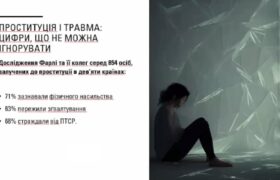
За останні роки в Ізраїлі виявили три мережі торгівлі жінками, де експлуатували українок, котрі тікали від війни за кордон. Ця індустрія маскується, але її сутністю лишається насильство і контроль. Це частини єдиної системи, котра руйнує життя ізраїльтянок та іноземок. Все позитивне маскування є брехливим. Онлайн акаунти жертв сексуальної експлуатації ведуть сутенери, про це є чимало свідчень. В місяць проституйовані жінки можуть отримувати до 150 доларів США, розхвалені надприбутки належать сутенерам. Telegram це окремий даркнет, там маса груп, де просувають проституцію. Наслідки проституції – жахливі довготривалі травми. Згідно з опитуванням 854 осіб у 9 країнах, 27% з них мали психіатричну госпіталізацію, 37% мали спроби суїциду, розлади харчування, також лікували інфекції. 71% опитаних пережили у проституції насильство, 63% були зґвалтовані, 68% мали ПТСР. В інтернеті проституція стає ще жахливішою, оскільки її фіксують на відео і постійно повторюють далі. В Ізраїлі вже прийняті спеціалізовані закони проти цього, але вони слабко працюють. В Україні, зі слів Люби Фейн, порнографію хочуть замаскувати під відновлення країни. Дохід задіяних жінок від цього малий, і невідомо, скільки буде витрачено на їхню реабілітацію. «Секс індустрія не є якоюсь сукупністю жінок, які нібито хочуть багато сексу. Ніяка економіка так не працює, пропозицію завжди створює попит. Все організує той, хто отримує прибуток. Українські феміністки є неймовірними, навіть переживаючи війну, вони борються з цим у цей важкий час», – подякувала за участь в онлайн зустрічі Люба Фейн.

Представник української громадської організації «Стоп секстінг» Василь Філоненко розповів, що нині в школі семикласники знають, як купити через Telegram наркотик, тим більше мають доступ до порноконтенту і самі можуть легко стати жертвою онлайн торгівлі людьми. Порноконтент є нормалізацією насильства, він згубно впливає на дитячий мозок. Створення, поширення порноконтенту є кримінальною відповідальністю, чого не розуміють люди, які не вбачають криміналу в поширенні власних фото та відео. Так само насильство над дитиною часто починається з онлайн контакту.  

Гендерна експертка Марія Дмитрієва уточнила, що за 11 років від початку російського вторгнення в Україну на сході та в Криму в даркнеті зросла кількість злочинного відео з дітьми на окупованих українських територіях. До 1/3 відео зі зґвалтуваннями дітей знімались саме там.

Заходи ГО «Центр – Розвиток демократії»  проводяться в рамках підготовки до розробки нової Державної цільової соціальної програми боротьби з торгівлею людьми на період до 2025 року. Почути голоси експертів з різних країн є критично важливим для якісного оновлення української політики та врахування як нових викликів, так і нововведень у міжнародному праві та нормах у відповідь на ці проблеми.

Expert Meeting: “Contemporary Challenges in Addressing Online Sexual Exploitation”

On April 18, 2025, an expert online discussion was held on the topic “Contemporary Challenges in Addressing Online Sexual Exploitation”. This is the second event in a series of discussions organized by the CSO “Democracy Development Center” at the initiative of the Ministry of Social Policy of Ukraine, in cooperation with the Public Council under the inter-factional association “Equal Opportunities” of the Verkhovna Rada of Ukraine, the National Agency of Ukraine for Civil Service Issues, the Higher School of Public Administration, and with the support of UN Women in Ukraine. українською

The event was opened by:

  • Maria Dmytrieva, Program Director, Democracy Development Center;
  • Representative of the Ministry of Social Policy of Ukraine;
  • Representative of the Higher School of Public Governance;
  • Oleksandra Novikova, European Network of Migrant Women (ENoMW).

The experts were invited:

  • Tarana Baghirova, Programme Assistant, OSCE — “Risks and Responses to Trafficking for the Purpose of Online Sexual Exploitation”;
  • Taina Bien-Aimé, Executive Director, Coalition Against Trafficking in Women (CATW), USA;
  • Vasyl Filonenko, NGO “Stop Sexting”, Ukraine;
  • Luba Fein, Voices of Israeli Sex Trade Survivors, Israel;
  • Tatiana Kotlyarenko, Independent Consultant on Human Rights Issues, Switzerland.

The topics of discussion are part of Ukraine’s international obligations — in particular, the UN Convention on the Elimination of All Forms of Discrimination against Women (CEDAW), UN Security Council Resolution 1325 “Women, Peace, Security”, and are important in the context of adapting Ukrainian legislation to European Union norms and obligations to other international structures. These topics are becoming even more relevant in the context of full-scale war, increasing vulnerability of women, and increasing gender-based violence.

At the beginning of the full-scale Russian invasion of Ukraine, women-refugees to European countries and their children became targets of those who create criminal sexual content, including with minors. This was confirmed by independent consultant on human rights issues, expert on gender-based violence and human trafficking Tetyana Kotlyarenko (Switzerland). According to her, when considering this problem, it is especially necessary to pay attention to the situation of Ukrainian women-migrants.

“I would like to go back to the beginning of the full-scale Russian invasion, when, as an advisor on women’s and children’s rights, I interviewed those who left Ukraine. These women and children were hunted by those who intended to create sexual content, including with minors, of an illegal nature. Vulnerable Ukrainian women and their children became the target of online sexual exploitation, the demand for which is very high online, because the pornography that is produced is also exploitation. “The fact that these people are refugees already makes them much more vulnerable. We conducted trainings for those who work with refugees from the war in Ukraine, and even during the training they were approached with such proposals,” said Ms. Tetyana.

According to her, it is necessary to talk about the nature of online exploitation, because current laws focus on the traditional idea of ​​exploitation and human trafficking, even though a lot of recruitment now takes place online.

“Criminals contact online, they don’t even need pimps, they use people via the Internet. There are many technical methods. It is also important to talk about the changes that are happening through technology. There is a lot of talk about artificial intelligence now. It can be used for good purposes, but human traffickers are expanding their activities with its help. “They quickly find vulnerable women and children, use them for grooming, it’s like a “technical pimp.” The evolution of technology is expanding the exploitation of women and children, even children who are now in Ukraine, because they can be contacted via the Internet,” the expert explains.

It is significant that now they are talking about protecting children from Ukraine, but in the same countries they are criminally exploiting children from Ukraine. About 300 children were taken from such situations, they were dragged into sexual exploitation via the Internet. There is still an understanding of different models of what is the effectiveness of prevention. Normalizing online communication, says Tetyana Kotlyarenko, is a model of equality, or the Swedish Nordic model. It can protect women and children, if it is implemented, then all vulnerable people who are involved in sexual activity should be protected, and those who exploit them should be punished. Today, any woman and child in Ukraine is vulnerable, and pornography is a huge driving force that pulls this whole train of sexual exploitation.

Oleksandra Novikova, who heads the European Network of Migrant Women (ENoMW), confirmed that migrant women are the most vulnerable group abroad due to lack of funds, often due to debt, language and cultural barriers. Women are afraid to contact the police, lest they lose some of their rights or be deported. Women are victims of threats and manipulations that involve them into sexual exploitation. According to Olexandra Novikova, when a woman goes to another country, she is immediately attacked online from the service where she registered her address. They offer to do “modeling work” or send photos. To avoid this, she needs to know where and how to seek help, and we also need to develop policies against violence.

Programme Assistant OSCE Tarana Baghirova stated that technologies are a two-sided phenomenon: on the one hand, they are useful for educational purposes, on the other, they have become a conduit for online sexual exploitation. The scale is terrifying: according to research, the bulk of Internet technologies are supporting criminal structures. Technologies are used at all stages, from recruitment to control of victims. Control of victims, a significant part of whom are underage girls, can take various forms. This can include threats to make their content public. The victim is physically free, but is being blackmailed. There are cases where rapists videotape the victim and threaten to harm her relatives in some way.

Also, since the beginning of the full-scale Russian invasion of Ukraine, the risks of victims being involved in sexual exploitation online and offline have increased significantly, disguised “job” ads are a sign of crime. In 2023, the UK passed a law that makes various online platforms directly responsible for the content they post.

Executive Director of the Coalition Against Trafficking in Women CATW (USA) Taina Bien-Aimé  clarified that the terminology “sex work” etc. was invented to normalize prostitution and trafficking of women. According to the Palermo Protocol, prostitution is trafficking of people, one cannot consent to one’s own exploitation, and the presence of consent does not make the crime a legal act.  All these international documents oblige Ukraine to combat the sexual exploitation of women and girls. In June 2024, the UN first stated that prostitution and pornography are human rights violations. Pornography is the filming of prostitution, the conversion of people into commodities by online pimps: the Onlyfans platform earned $6.6 billion in revenue in a year. Providers helped traffickers better distribute their advertising, and the laws were written in such a way that they were not responsible for the content.

Luba Fein, who represented the organization Voices of Sex Trafficking Victims in Israel at the event, also noted that the sexual exploitation industry is rapidly adapting to the digital age. Laws are not keeping up with reality, and pimps are already launching online applications. According to her, a network of human trafficking and prostitution was previously established between Israel and the former Soviet countries. The victims and pimps shared a common language and culture, which created trust, but in the country itself the women were defenseless, because the pimps had citizenship and knew the country, and the victims didn’t. The introduced law against human trafficking limited all this, but since 2022 everything has started to develop again.

In recent years, three networks of trafficking of women have been stopped in Israel, they were exploiting Ukrainian women fleeing war abroad. This industry is disguised, but its essence remains violence and control. They are parts of a single system that destroys the lives of Israeli and foreign women. All positive camouflage is false. Online accounts of victims of sexual exploitation are maintained by pimps, there is a lot of evidence of this. Prostituted women can receive up to $150 per month, the vaunted super-profits belong to the pimps. Telegram is a separate darknet, there are a lot of groups promoting prostitution. The consequences of prostitution are terrible long-term injuries. According to a survey of 854 people in 9 countries, 27% of them had psychiatric hospitalization, 37% had suicide attempts, eating disorders, and were also treated for infections. 71% of those surveyed experienced violence in prostitution, 63% were raped, 68% had PTSD. On the Internet, prostitution becomes even more horrific because it is recorded on video and constantly repeated. Israel has already passed specialized laws against it, but they are weakly effective. In Ukraine, according to Luba Fein, they want to disguise pornography as the country’s recovery. The income of the involved women is small, and it is unknown how much will be spent on their rehabilitation. “The sex industry is not some collection of women who supposedly want a lot of sex. No economy works like that, supply always is created by demand. Those who make a profit organize everything. Ukrainian feminists are incredible, even going through the war, they are fighting it in this difficult time,” Luba Fein thanked for participating in the online meeting.

Vasyl Filonenko, a representative of the Ukrainian public organization “Stop Sexting”, said that currently seventh-graders at school know how to buy drugs via Telegram, especially since they have access to pornographic content and can easily become victims of online human trafficking themselves. Porn content is a normalization of violence, it has a detrimental effect on children’s brains. The creation and distribution of porn content is a criminal offense, which is not understood by people who do not see the crime in distributing their own photos and videos. Similarly, violence against a child often begins with online contact.

Gender expert Maria Dmytrieva clarified that in the 11 years since the beginning of the Russian invasion of Ukraine in the east and Crimea, the number of criminal videos featuring children in the occupied Ukrainian territories on the darknet has increased. Up to 1/3 of videos featuring child rape were filmed there.

The events of the CSO “Democracy Development Center” are held as part of preparations for the development of a new State Targeted Social Program to Combat Human Trafficking for the period until 2025. Hearing the voices of experts from different countries is critically important for the qualitative renewal of Ukrainian policy and taking into account both new challenges and innovations in international laws and norms in response to these challenges.

An expert online discussion on “Surrogacy in the context of combating human trafficking”

On April 14, 2025, an expert online discussion was held on the topic “Surrogacy in the context of combating human trafficking.” This is the first event in a series of discussions organized by the CSO “Democracy Development Center” at the initiative of the Ministry of Social Policy of Ukraine, in cooperation with the Public Council under the inter-factional association “Equal Opportunities” of the Verkhovna Rada of Ukraine, the National Agency of Ukraine for Civil Service Issues, the Higher School of Public Administration, and with the support of UN Women in Ukraine. українською

The event was attended by:

  • Maria Dmytrieva, Programme Director, Democracy Development Center (Ukraine);
  • Oksana Pustova, State Expert on Human Trafficking, Ministry of Social Policy of Ukraine;
  • Yulia Honchar, UN Women program analyst on gender responsive governance;  
  • Yuliia Lykhach, Director, Higher School of Public Governance;
  • Oleksandra Novikova, European Network of Migrant Women (ENoMW);
  • Tetiana Rudenko, Senior Project Officer, OSCE Office of the Special Representative and Co-ordinator for Combating Trafficking in Human Beings;
  • Marie Josèphe Devillers, International Coalition for the Abolition of Surrogate Motherhood (ICASM), France;
  • Dr. Sheela Suryanarayanan, Associate Professor, Centre for Women’s Studies, University of Hyderabad (India);
  • Zoryana Skaletska, Kyiv City Council Member, Minister of Health of Ukraine (2019–2020).

The topic of surrogacy in the context of combating human trafficking is a difficult one, but it is critical for protecting women’s rights, for understanding new forms of exploitation and for developing adequate policies at the national level. It is important that the international partners of the event were representatives of the International Coalition to Ban Surrogacy (ICASM), the European Network of Migrant Women (ENoMW) and the International Women’s Platform for Action (WOPAI). Expert support for the event was also provided by the Office of the OSCE Special Representative and Co-ordinator for Combating Trafficking in Human Beings.

An overview of the situation with the vulnerability of Ukrainian migrant women in Europe, and the dangers of such commercial offers to women in an unstable financial situation, was made by Oleksandra Novikova (European Network of Migrant Women (ENoMW). In turn, Tetiana Rudenko, Senior Project Manager of the Office of the OSCE Special Representative and Co-ordinator on Combating Trafficking in Human Beings, provided data analysis on the topic “Surrogacy and the Risks of Human Trafficking: A Strategic Approach”. Marie Josèphe Devillers, representative of the International Coalition for the Abolition of Surrogate Motherhood (ICASM), France, also presented the study “Surrogacy as a Predatory System Targeting Vulnerable Women. A New Chapter in Human Trafficking”.  Dr. Sheela Suryanarayanan, Associate Professor Centre for Women’s Studies, University of Hyderabad (India), spoke about “Ethical Challenges of Surrogacy in India and Similarities with Ukraine.” Zoryana Skaletska, a member of the Kyiv City Council and Minister of Health of Ukraine in 2019–2020, provided expert commentary on the topic “Legal Certainty and Medical Ethics in Surrogacy: Between Instruction and Responsibility.”

In particular, Oleksandra Novikova emphasized that she can become a voice for Ukrainian migrant women as one of the most vulnerable groups, since this topic is not covered enough when talking about surrogacy. According to her, several years ago she herself received a message from a migrant woman like herself with an offer to earn money. It was about egg donation. In 2022, a study was conducted, according to which surrogacy is not a choice for women, especially for migrant women, because they are forced, threatened, and manipulated. They are promised high wages and support. This sounds realistic, but then women become victims of exploitation, lose control over their own lives and freedom. After the Russian invasion of 2022, many women found themselves abroad, they did not immediately understand that danger was nearby, they did not understand what was happening. Greece, where Oleksandra Novikova is, constantly finds itself at the center of scandals due to surrogacy practices. In 2023, a private clinic with a professor of medicine was discovered on the island of Crete and it turned out that when direct payment for surrogacy is prohibited, egg donations can be financed.

According to data provided by Tetyana Rudenko, the surrogacy industry is worth $14 billion as of 2022, and is projected to grow to $129 billion by 2032. Currently, there has been a surge in demand due to medical and social factors. Some countries have already banned surrogacy or are improving their by-laws, others are still in the process, some have banned it, including the inability to make such agreements abroad for their citizens; there are also case laws that regulate these relationships. According to her, in 2019, a whole network was exposed in Greece, which covered many countries: pregnant women were brought for illegal adoption, and their eggs were also removed. Surrogacy is one of the forms of multi-vector exploitation of women. The latest high-profile case is the capture of a group of women from Thailand for surrogacy, who were also forced to donate eggs. This group was transported through several countries to Georgia. Only one of the women managed to buy off the traffickers with the help of her relatives, and her testimony helped expose this network. The most progressive legislation in this regard is in Italy, which prohibits all types of surrogacy both domestically and abroad. After all, surrogacy practices do not protect the children themselves in any way. They do not have the right to reside, do not have the right to inheritance, etc. A court case in Italy did not hand over the child to the ordering parents, leaving it under the care of the state for further legal adoption by other people, arguing that the unethical nature of ordering a child as a commodity makes it impossible to hand over the child to such a family. The European court also determined in one of its verdicts that the state must have mechanisms for establishing a connection between the child and the surrogate mother, which, for example, does not exist in Ukraine where orphanages are already overflowing with these children. Traffickers deliberately seek out vulnerable women, including widows (which is especially actual during the war in Ukraine), single women, and there are also women who are forced to do this by their relatives. The woman does not have complete and correct information about what will happen to her, Also, after giving birth, she does not have any medical care – as in practices involving organ removal, no one is interested in the future fate of the donor, and the stereotypical attitude towards women as a mechanism for bearing a child is strengthened.

As gender expert Maria Dmytrieva added, surrogacy is actively promoted in Ukraine under the slogan “While there is war, it is cheaper there.” Interested parties directly declare that if Ukrainian women refuse to do it, they will bring women here from even poorer countries. There have already been cases when women were brought to Ukraine from Central Asian countries, and their fate after birth is unknown. That is, our country, in addition to being a country of origin for surrogacy practices, has also become a country of transit.

Marie Josèphe Devillers added that surrogacy is a form of violence against women. Ending this practice is part of the feminist agenda. Surrogacy is misogyny, it is violence and reproductive exploitation. First of all, it is a predation on women, but it is also a predation on their countries, it is a drain on medical resources, inequality between the customer and the woman who gives birth. This is the result of economic dependence, the subordinate position of the women involved in relation to the customers. The money received does not provide any stable financial improvement. In fact, the funds are displaced into dubious areas of activity. Even if surrogacy takes place within the country, even on an altruistic basis and within the same family – this always applies to the poorer and weaker. They always involve migrant women. Richer people do not want to risk their health and exploit the poor. In Ukraine, according to the announced data, about 2,000 thousand such children are born every year. “I was shocked to hear that in South Africa an entire surrogacy sector is growing while there are no basic medical services for citizens. Doctors who work in surrogacy are trained in the West, but they work for the interests of the parents-clients, not for the health of the women. In Kenya, the entire tourism industry is tied to surrogacy. When India first began restricting surrogacy practices in 2015, the Indian clinics simply moved to Kenya. In Africa, there is generally a lot of social pressure on women to give birth, while in Europe it is mostly a woman’s right,” said Marie Josèphe Devillers. She stated that the ban on surrogacy should happen in the same way as the ban on human trafficking, the ban on rape, this is an international node that must be condemned. This has already happened in Italy. In 2015, the European Parliament condemned surrogacy, and in 2024 the European Union added surrogacy to the list of crimes related to human trafficking.

As Dr. Sheela Suryanarayanan said, in 2021, India finally completely banned commercial surrogacy, but gaps in the law still remain. Until then, women from poorer countries were actively brought to India, but not because surrogacy was cheaper in this country, but because surrogate mothers had no rights to the child there. This is the main reason. If you legalize even some kind of surrogacy, it immediately opens the door to all illegal practices and phenomena. In all poor countries, this happens the same way. Customers paid money only when they picked up the child, and also refused if they didn’t like it for some reason. It was complete chaos. There is a case where a 13-year-old girl was kidnapped by traffickers, raped and forced to give birth six times. At that moment, surrogacy was legal, but under its cover, ordinary human trafficking was developing. And after the adoption of the law banning surrogacy, specialists from a private hospital in Delhi for “some reason” left their place and moved to the poorer province of West Bengal. Why there – after the surrogacy ban, women from Nepal were brought to this region, and the local authorities were not up to it because of their own problems. But still, the ban had a certain impact. Indeed, not a single woman was able to escape poverty thanks to the surrogacy fee. Furthermore, there was a stark contrast between the modern, shiny clinics and the barracks where surrogate mothers lived, and their reality, for example, of forced, selective abortions if the customers did not like the sex of the fetus. Many children born in this way die, more than in a healthy normal birth. But no one keeps statistics. In this case, mothers don’t have any payment either. This is a biomarket. There is no constitutional right as such to become biological parents, no one can force a more vulnerable person to go through all this to have their genetic child, so surrogacy should be banned.

As for the legislation of Ukraine, as noted by the Minister of Health of Ukraine in 2019–2020 Zoryana Skaletska, regarding surrogacy, we have two pages in the order document of the Ministry of Health and one article in the Family Code. Anyone who works in the public sector knows how many by-laws, orders, and instructions regulate all the nuances of any relationship. In surrogacy in Ukraine, this is not the case – two pages of an order and one article, that’s all. What can be done in Ukraine at this time is to remember that there is law and there is morality. If there are no, people are left alone with the laws of the market, where those who have money and profit can dictate. In Ukraine, there are more or less transparent clinics that maintain some kind of medical registration, but in general there are no registers of surrogacy in the state. There is no question of any informed consent, there is no legal clarity of the processes. There is no responsibility of medical institutions where this happens, there are only contracts with women and huge fines for them. The range of problems is terrible, and most importantly – the unclear status of the child. The woman’s body is treated as an incubator, and the child is not protected by anything at all. The child is chosen, as in a supermarket. “No document speaks of the interests of the child. According to the European Parliament directive of 2011, the use of surrogacy is exploitation, the object of the crime is the will and dignity of the person. Similarly, human dignity is the core of ethics. There is no ethical code in surrogacy practices, there are no ethical statements. The doctor is not responsible for anything in the future. The 1997 Oviedo Convention on Human Rights and Biomedicine has not been ratified by Ukraine! There must be no manipulation of a person’s body if it contradicts their dignity. In addition, a person has the right to withdraw informed consent – ​​this is also not the case in surrogacy. Ethical principles regarding the child should be key for doctors, surrogacy practices are an example of dysfunctional law and ethics,” concluded Zoryana Skaletska. According to her, Ukraine has a terrible reputation in this regard; as the head of the Ministry of Health, she proposed changes, but they remained in the draft.

As Maria Dmytrieva added, the only mother a child knows is the woman who carried it. Everywhere there is an opportunity to give a born child to a surrogate mother, but in Ukraine this right is not available. There is already a whole movement of surrogate children in the world, who call for the banning of this inhuman practice as a violation of the rights of the child. Ukraine has already prepared legislation on surrogacy, it is impossible to find out what is written there. The project was discussed only with surrogacy clinics, neither women’s organizations nor children themselves were involved in its development. That is why traffickers hunt Ukrainian women: our legislation allows it.

The topics of discussion are part of Ukraine’s international obligations — in particular, the UN Convention on the Elimination of All Forms of Discrimination against Women (CEDAW), UN Security Council Resolution 1325 “Women, Peace, Security”, and are important in the context of adapting Ukrainian legislation to European Union norms and obligations to other international structures. These topics are becoming even more relevant in the context of full-scale war, increasing vulnerability of women, and increasing gender-based violence.

The events of the CSO “Democracy Development Center” are held as part of preparations for the development of a new State Targeted Social Program to Combat Human Trafficking for the period until 2025. We are convinced that hearing the voices of experts from different countries is critically important for the qualitative renewal of Ukrainian policy and taking into account both new challenges and innovations in international laws and norms in response to these challenges.

Video of the online discussion

Спеціальна доповідачка ООН з питань насильства проти жінок і дівчат Рім Аль-Салем

Спеціальна доповідачка ООН з питань насильства проти жінок і дівчат Рім Аль-Салем абсолютно переконана, що найкращою політикою щодо проституції є Нордична модель.