Відбувся онлайн семінар у рамках проєкту НУО ЦРД за підтримки OXFAM «Екологічна безпека з урахуванням гендерної перспективи»

Понад 300 осіб долучилися до роботи онлайн-семінару «Міжнародний досвід врахування екологічної теми в програмах та планах дій з гендерної політики та прав жінок». Захід був організований у в межах проєкту «Екологічна безпека з урахуванням гендерного підходу», котрий реалізує НУО «Центр – Розвиток демократії» за підтримки OXFAM. English

Також співорганізаторами заходу виступили Вища школа публічного управління, Громадська рада при МФО «Рівні можливості».

Учасників та учасниць онлайн майстерні привітала представниця OXFAM у Польщі та Україні Домініка Ожинська. Також про глобальні тенденції екологічної безпеки і гендерної рівності та порядку денного «Жінки. Мир. Безпека» розповіла представниця Глобальної мережі жінок-миробудівниць #GNWP Марія Вікторія Кабрера-Балеза. З її слів, екологічні проблеми є наднаціональними, це забруднення, втрати біорізноманіття, необхідність залучення інновацій та джерел відновлювальної енергії. Також йдеться про сільськогосподарські практики, які підтримують стабільність екологічного середовища, ширше представлення місцевих громад у створенні відповідних політик та значення рівного залучення жінок та чоловіків. Знищення біосфери саме по собі призводить до конфліктів, від яких передусім страждатимуть незахищені жінки і дівчата, і кожна людина повинна мати права і владу для інклюзивної безпеки.

Про значення рішення Європейського суду з прав людини щодо прав жінок та кліматичні зобов’язання від 9 квітня 2024 року розповіла представниця KlimaSeniorinnen Schweiz (Швейцарія) Пія Голленштайн. З її слів, ініціаторки позову йшли до прецедентного рішення ЄСПЛ дев’ять років, їм відмовили всі місцеві суди, однак у Європейському суді з прав людини звернули увагу на статті Конвенції з прав людини про право на життя і принцип екологічного захисту, і відтак судді зобов’язали Швейцарію кожні пів року звітувати про покращення кліматичної стратегії. Також це рішення є прецедентним тому, що підтвердило можливість неурядових організацій вимагати захисту середовища.

Про взаємозв’язок між конфліктним руйнуванням довкілля та гендерною рівністю розповіла представниця Шведського агентства з питань гендерної рівності Анна Коллінс Фалк. Також про досвід жіночих організацій у Європі та реагування на наслідки російського вторгнення в Україну розповіла представниця вірменської ГО «Жіночий порядок денний» Кнарік Мкртчян та Президентка Гендерного центру (Молдова) Валентина Бодруг-Лунгу. Адже в Молдові українських біженців прийняли утричі більше в розрахунку на 10 тисяч власного населення, ніж у Польщі, майже 70% це були жінки і дівчата.

Досвідом українських громадських організацій поділилася представниця ГО «Жіночий енергетичний клуб України» Наталія Ревуцька, котра розповіла про гендерні виміри енергетичної безпеки в Україні. Також до онлайн майстерні долучилася Валерія Бондарєва (молодіжна еко-феміністична ГО «Розвій») та Софія Шевчук (Платформа VONA & ГО «The Tide»), котра пояснила особливості інтеграції гендерної та екологічної складових у плани місцевого відновлення.

Раніше повідомлялося, що НУО «Центр – Розвиток демократії» реалізує проєкт у співпраці з Міністерством захисту довкілля та природних ресурсів та Міністерством соціальної політики України за фінансування міжнародного об’єднання OXFAM. Заплановані заходи в рамках співпраці триватимуть п’ять місяців.

У проєкті заплановане залучення консультантів і тренерів з питань екології та соціальної політики для розробки пропозицій до Національного плану «Жінки. Мир. Безпека». Також буде проведений оффлайн семінар з питань розвитку стратегії і пропозицій до Національного плану «Жінки. Мир. Безпека», національний онлайн захід з питань впровадження гендерної перспективи у відновлення України.

OXFAM — міжнародне об’єднання із 21 організації, що працюють у 81 країні по всьому світу з метою розв’язати проблеми бідності та несправедливості.

Директорка програм НУО «Центр – Розвиток демократії» взяла участь у міжнародній конференції ЖМБ у Сараєво

Експертка з гендерних питань, директорка програм НУО «Центр – Розвиток демократії» Марія Дмитрієва взяла участь у міжнародній конференції, присвяченій порядку денному «Жінки, мир та безпека» «ВІД ГЕНДЕРНОЇ СПРАВЕДЛИВОСТІ ДО СТАЛОГО МИРУ: 25-РІЧНЕ БАЧЕННЯ». Захід відбувся у Сараєво (Боснія і Герцеговина) 12-13 червня 2025 року. English

Конференція зібрала понад 100 учасників та учасниць із Боснії та Герцеговини, Західних Балкан, Європи, Центральної Азії та інших частин світу, включаючи представників національних та міжнародних інституцій, лідерів громадянського суспільства, активістів та жінок-миробудівниць, які зробили свій внесок у вирішення конфліктів та розбудову миру.

Досвід Боснії та Герцеговини допоміг сформувати Резолюцію Ради Безпеки ООН 1325, і завдяки послідовним Національним планам дій, правовим реформам та тісній співпраці між урядом і громадянським суспільством, Боснія і Герцеговина пропонує цінні уроки щодо постконфліктного відновлення та жіночого лідерства у розбудові миру. Боснія і Герцеговина також відіграла ключову роль у міжнародному правосудді, створюючи глобальні прецеденти щодо сексуального насильства, пов’язаного з конфліктом, завдяки знаковим справам, що розглядаються в МТКЮ та національних судах. Конференцію спільно організували Міністерство у справах прав людини та біженців Боснії і Герцеговини та Організація Об’єднаних Націй у Боснії та Герцеговині в рамках ініціативи «Жінки прокладають шлях до миру та безпеки», що реалізується структурою «ООН-жінки», Фонд народонаселення ООН та МОМ за підтримки Фонду миробудівництва Генерального секретаря ООН (PBF). Організацію конференції також підтримало Міністерство закордонних справ Данії.

The CSO DDC program director participated in WPS International conference in Sarajevo

A gender expert, the CSO “Democracy Development Center” program director Maria Dmytrieva participated an international conference dedicated to Women, Peace and Security agenda “FROM GENDER JUSTICE TO SUSTAINABLE PEACE: A 25-YEAR VISION”. The event was held in Sarajevo (Bosnia and Herzegovina) on 12-13 June, 2025. українською

The conference brought together more than 100 participants from BiH, the Western Balkans, Europe, Central Asia, and other parts of the world, including representatives of national and international institutions, civil society leaders, activists, and women peacebuilders who have contributed to conflict resolution and peacebuilding.

Experiences from BiH helped shape UNSCR 1325, and through successive National Action Plans, legal reforms, and strong government-civil society collaboration, BiH offers valuable lessons on post-conflict recovery and women’s leadership in peacebuilding. BiH has also played a key role in international justice, setting global precedents on conflict-related sexual violence through landmark cases before the ICTY and domestic courts.

The conference was jointly organized by the Ministry for Human Rights and Refugees of Bosnia and Herzegovina and the United Nations in Bosnia and Herzegovina as part of the “Women Lead the Way towards Peace and Security” initiative, implemented by UN Women, UNFPA and IOM with support from the UN Secretary-General’s Peacebuilding Fund (PBF). The organization of the conference was also supported by the Ministry of Foreign Affairs of Denmark.

The CSO DDC expert participated in consultations on the issue of surrogacy with the UN Special Rapporteur on violence against women

A gender expert, the program director of the CSO “Democracy Development Center” Maria Dmytrieva participated in consultations on the problems posed by the practice of surrogacy. The consultations were conducted by the UN Special Rapporteur on violence against women and girls, its causes and consequences, Reem Al-Salem. українською

Discussions were held on key issues to develop further recommendations to respond to violations of women’s rights in the practice of surrogacy.

It was previously reported that UN Special Rapporteur Reem Al-Salem supports the Swedish model of combating prostitution.

Експертка НУО ЦРД взяла участь у консультаціях стосовно проблеми сурогатного материнства зі спеціальною доповідачкою ООН з питань насильства щодо жінок

Гендерна експертка, програмна директорка НУО «Центр – Розвиток демократії» Марія Дмитрієва взяла участь у консультаціях стосовно проблем, які несе практика сурогатного материнства. Консультації проводила спеціальна доповідачка ООН з питань насильства щодо жінок і дівчат, його причин та наслідків Рім Аль-Салем. English

Обговорення відбулись із ключових питань для розробки подальших рекомендацій реагування на порушення прав жінок у практиці сурогатного материнства.

Раніше повідомлялося, що спеціальна доповідачка ООН Рім Аль-Салем підтримує шведську модель протидії проституції.

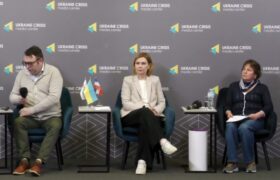
Голова НУО ЦРД Елла Ламах взяла участь у презентації дослідження гендерних особливостей кібернасильства

Українські дівчата частіше страждають від сексуалізованого кібернасильства, ніж хлопці. Найбільш поширене онлайн-цькування в Telegram, Instagram та TikTok. Такий результат оприлюдненого в Києві дослідження гендерних особливостей кібернасильства щодо дітей (дівчат та хлопців) в Україні. Аналіз був проведений в LHSI МГО «Соціальні ініціативи з охорони праці і здоров’я» та презентований автором Вадимом Шарком у Кризовому медіа-центрі 30 травня 2025 року.

«Метою дослідження став гендерний аналіз кібернасильства щодо дівчат та хлопців різного віку в Україні, виявлення специфічних гендерних особливостей його проявів та розроблення рекомендацій для вдосконалення системи запобігання та протидії», –  розповів Вадим Шарко.

Під час війни в Україні онлайн-насильство проти дітей (дівчат та хлопців) почали ще більше використовувати для різних методів маніпуляції, вербування підлітків, сексуального насильства, булінгу, тощо. Саме тому необхідно прискорити реагування на ці виклики. Так вважає гендерна експертка, голова ВГО «Центр – Розвиток демократії» Елла Ламах. Вона розповіла про методи шантажу щодо дівчат і хлопців. Підлітків кримінальні кола часто змушують займатись порнографією або ділитися інтимними фото.

В першу чергу, слід поширити серед підлітків інформацію про те, як убезпечитись від онлайн-цькування і куди звертатись за допомогою. На думку автора дослідження, недостатньою є поінформованість українських вчителів та шкільних психологів про заходи з протидії кібербулінгу та допомоги постраждалим, також слід поширювати інформацію і серед батьків підлітків.

У презентації взяла участь Євгенія Усиченко – представниця організації «Teenergizer», яка надає психологічні онлайн консультації підліткам, які зазнали онлайн-цькування. Допомога на цьому ресурсі – безкоштовна та анонімна, достатньо просто написати у чат і відповість професійний психолог, який навчений методикам допомоги в таких випадках.

Для більш ефективного захисту підлітків від онлайн-цькування необхідно найближчим часом розробити та впровадити національну стратегію захисту дітей  від кібернасильства з відповідальними організаціями, чіткими індикаторами виконання та механізмами моніторингу. А також гармонізувати національне законодавство з міжнародними стандартами (наприклад, Директивою (EU) 2024/1385 щодо боротьби з насильством щодо жінок та домашнім насильством, Актом про цифрові послуги ЄС (2024 р.)). Такі рекомендації авторів Звіту з Гендерного аналізу МГО «Соціальні ініціативи з охорони праці та здоров’я» (LHSI).

Організація також намагається поширити знання про захист від онлайн-цькування візуальним і інформаційним контентом. Саме тому запускається медіа-кампанія в Україні щодо захисту від кібер-булінгу, зазначила керівниця напрямку LHSI Наталя Лук’янова. За її словами, окрім використання соцмереж та інтернет-сайтів, в регіоні спрямовані інформаційні плакати для дітей та батьків. Вони будуть спершу поширені в Харківський, Вінницькій та Київський областях у школах, комунальних центрах, як великих міст, так і сіл.

Проект Cyber safe Girls здійснюється в межах проекту CybersafeGirls, який впроваджується за фінансової підтримки Міністерства Закордонних Справ Королівства Нідерландів.

The CSO DDC expert participated in an international online meeting on the implementation of the Swedish model for overcoming prostitution

On May 28, 2025, an international online meeting of participants from organizations working in the field of implementing the Swedish model – the Nordic model of equality in European countries took place, with the representatives of Ukrainian partner organizations “All-Ukrainian League “Legalife” and CSO “Democracy Development Center”.  українською

Head of the All-Ukrainian League “Legalife” Yulia Dorokhova and program director of the CSO “Democracy Development Center” Maria Dmytrieva spoke about the peculiarities of Ukrainian legislation in the field of combating human trafficking and in particular involvement in prostitution, as well as about the implementation of the Swedish model. The discussion included issues relevant to Ukrainian women, including refugees, the impact of Russian aggression on women in Ukraine, and the situation of migrant women.

The meeting was organized by the federal association of networks and initiatives “Bundesverband Nordisches Modell e.V.”, which includes dozens of organizations working together to change prostitution policy in Germany.

According to Yulia Dorokhova, under the legalization of prostitution, in Germany there are actually two governments: the political one and the other dark one. A woman involved in street prostitution pays a “tribute” of 150-170 euros every week. Women are simply dragged to “earn” money in street toilets for price less than a pack of cigarettes. “Nobody protects them. At the beginning of the invasion, there was still support at the border, now everyone has forgotten about them, women and children. Women are recruited to the Emirates through the darknet, then they don’t return and disappear. A month ago, a girl was found on the street in Dubai who jumped out of a window because she was being forced to have sex with animals on demand – while the men watched. Now she is all broken, she doesn’t speak, she is in the hospital. Also, many women are no longer found, they have already disappeared. We need support. It is currently provided by the European Network of Migrant Women, but the network of involving women into prostitution is very large.  For example, to enter the UK, you need a visa and an invitation from host, then girls are promised help, but then they see that women are disoriented, do not know the language, have no support, and women in a bad psychological state are hunted, the same thing happens in Romania, Greece, etc.,” said Yulia Dorokhova.

Kerstin Neuhaus, a representative of the Bundesverband Nordisches Modell e.V., added that she was a social worker in assistance for refugee women, warning them not to trust strangers. However, now, especially in Berlin, there are a lot of Ukrainian women who have already suffered from being involved in prostitution, the problem is tremendous.

It also emerged that although German law prohibits the job-centers to offer women “work” in prostitution, there have been reports in the media and in private conversations of cases when these managers have offered them exactly that “possibility”. The same happens in other countries, where vulnerable groups of women are called “fresh girls”; “sex workers” organizations do not protect prostituted women and girls, but instead protect pimps. In Belgium, a “progressive” law has been passed, according to which a pimp can sue a woman in court for refusing clients.

To overcome this, representatives of Ukrainian organizations are building a network of contacts, including among European government officials. “If the EU approves the Swedish model, it will be easier for Ukraine, which is focused on European integration, to do the same,” says Maria Dmytrieva.  According to her, there are also supporters of the Swedish model within the country, including law enforcement officers who have received appropriate training, as well as politicians. However, after visiting EU countries, Ukrainian migrants flee home under bullets, without waiting for the war to end. As Natalia Semenova, a participant in the event, testified, these women receive terrible medical care abroad, women don`t even receive prescribe for antibiotics, except vitamins. There is no help from benefactors either, only food. There is also no work, the attitude towards women in prostitution is terrible, but apart from them, no one knows what is really happening: only those who make money from them are on the top of attention.

Summing up the discussion, Yulia Dorokhova noted that along with lobbying for the legalization of prostitution in Ukraine, there is no less a problem – corruption, including that of law enforcement officers who cover it all up. In her words, “the Swedish model is good, but I don’t know what will stop corruption in this country, we need to use European methods, but must understand what is being done here. We need to spread information about the Swedish model among women, because so far only propaganda about “sex work” is being spread. To do this, we need to give the floor to real women who have already experienced legalization and can talk about it.”

This is the first event in a series of online meetings to discuss the topic “International Perspectives on Prostitution”, which will take place in the future.

Експертка НУО ЦРД взяла участь у міжнародній онлайн зустрічі із впровадження шведської моделі подолання проституції

28 травня 2025 року відбулась міжнародна онлайн зустріч учасниць організацій, котрі працюють у сфері впровадження шведської моделі – моделі рівності (Nordic model) у країнах Європи, з представницями українських партнерських організацій БО «Всеукраїнська ліга «Легалайф» та НУО «Центр – Розвиток демократії». Йшлося про подолання втягнення жінок, дівчат та дітей до проституції, шляхи протистояння цьому злочину та його наслідкам.  English 

Зустріч організувала федеральна асоціація мереж та ініціатив «Bundesverband Nordisches Modell e.V.», до котрої входять десятки організацій, що разом працюють над зміною політики щодо проституції у ФРН.

Очільниця БО «Всеукраїнська ліга «Легалайф» Юлія Дорохова та програмна директорка НУО «Центр – Розвиток демократії» Марія Дмитрієва розповіли про особливості українського законодавства у сфері протидії торгівлі людьми та зокрема залученню до проституції, а також про впровадження шведської моделі. Йшлося, зокрема, про проблеми, актуальні для українок, в тому числі біженок, про вплив російської агресії на жінок в Україні та про становище мігранток.

За визначенням Юлії Дорохової, в умовах легалізації проституції в Німеччині фактично діє два уряди: один політичний і другий тіньовий. Жінка, яка втягнута до проституції на вулиці, щотижня платить «данину» у 150-170 євро. Жінок тягнуть «заробляти» просто до вуличних туалетів за ціною дешевше пачки цигарок. «Ніхто їх не захищає. На початку вторгнення ще була підтримка на кордоні, тепер про них, жінок і дітей, всі забули. Жінок вербують в Емірати через даркнет, далі вони не повертаються і щезають. Місяць тому в Дубаї на вулиці знайшли дівчину, яка вистрибнула з вікна, бо її на замовлення змушували до сексу з тваринами – чоловіки же за цим спостерігали. Тепер вона вся переламана, не говорить, у лікарні. Так само чимало жінок вже не знаходять, вони вже зникли. Нам потрібна підтримка. Її зараз надає Європейська мережа жінок-мігранток, але мережа втягування жінок у проституцію дуже велика. Наприклад, щоб в’їхати до Великобританії, потрібна віза і запрошення, то дівчатам обіцяють допомогу, але потім бачать, що вони дезорієнтовані, не знають мови, не мають підтримки, і на жінок у поганому психологічному стані полюють, те саме відбувається у Румунії, Греції тощо», – розповіла Юлія Дорохова.

Представниця «Bundesverband Nordisches Modell e.V.» Kerstin Neuhaus додала, що працювала у соціальній допомозі для біженок, попереджаючи їх про те, щоб вони не довіряли чужим. Однак зараз, особливо у Берліні, дуже багато українок, які вже постраждали від залучення до проституції, проблема дуже велика.

Також з’ясувалося, що хоча німецьким законом жінкам заборонено пропонувати «працювати» у проституції, у ЗМІ і в приватних бесідах було відомо про випадки, коли представники центрів працевлаштування саме це їм і пропонували. Аналогічне коїться і в інших країнах, коли вразливим групам жінок кажуть «свіжа дівчина», організації «секс-працівників» ніяк не захищають проституйованих жінок та дівчат, натомість захищають сутенерів. У Бельгії прийнятий «прогресивний» закон, згідно з яким сутенер може потягнути жінку в суд за відмови клієнтам.

Щоб здолати це, представниці українських організацій налагоджують мережу контактів, в тому числі серед європейських урядовців. «Якщо ЄС схвалить шведську модель, Україні, яка орієнтується на євроінтеграцію, буде простіше зробити те саме», – каже Марія Дмитрієва. З її слів, усередині країни також є прихильники впровадження шведської моделі, це як правоохоронці, які мають відповідне навчання, так і політики. Разом з тим, побувши у країнах ЄС, українські мігрантки тікають додому під кулі, не чекаючи, чи закінчиться війна. Як засвідчила слухачка заходу Наталія Семенова, вони отримують за кордоном жахливу медичну допомогу, жінкам не виписують навіть антибіотиків, хіба вітаміни. Допомоги від благодійників також нема, тільки продукти. Роботи також немає, ставлення до жінок у проституції жахливе, але крім них самих, ніхто не знає, що відбувається насправді: на слуху лише ті, хто робить на них гроші.

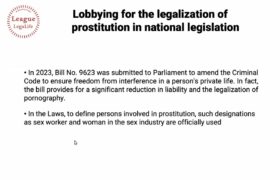
Підсумовуючи обговорення, Юлія Дорохова зазначила, що разом з лобіюванням легалізації проституції в Україні є не менша проблема – корупція, в тому числі правоохоронців, які це все прикривають. З її слів, «шведська модель це добре, але я не знаю, що зупинить корупцію в цій країні, треба використовувати європейські шляхи, але розуміти, що робиться у нас. Треба поширювати серед жінок інформацію про шведську модель, бо поки що поширюється лише пропаганда «секс-роботи». Для цього треба давати слово реальним жінкам, які вже пережили легалізацію і можуть про це розповідати».

Це перший захід із серії онлайн зустрічей для обговорення теми «Міжнародні погляди на проституцію», котрі відбуватимуться надалі.

Pornographic content is a driving force for the criminal sexual exploitation, says independent human rights consultant

At the beginning of the full-scale Russian invasion of Ukraine, women-refugees to European countries and their children became targets of those who create criminal sexual content, including with minors. This was confirmed by independent consultant on human rights issues, expert on gender-based violence and human trafficking Tetyana Kotlyarenko (Switzerland), who participated in an expert online discussion on the topic ” Contemporary Challenges in Addressing Online Sexual Exploitation.” українською

The event was held on April 18, 2025, it was the second event in a series of discussions organized by the CSO “Democracy Development Center” at the initiative of the Ministry of Social Policy of Ukraine, in cooperation with the Public Council under the inter-factional association “Equal Opportunities” of the Verkhovna Rada of Ukraine, the National Agency of Ukraine for Civil Service Issues, the Higher School of Public Administration, and with the support of UN Women in Ukraine.

According to Tetyana Kotlyarenko, when considering this problem, it is especially necessary to pay attention to the situation of Ukrainian women-migrants.

“I would like to go back to the beginning of the full-scale Russian invasion, when, as an advisor on women’s and children’s rights, I interviewed those who left Ukraine. These women and children were hunted by those who intended to create sexual content, including with minors, of an illegal nature. Vulnerable Ukrainian women and their children became the target of online sexual exploitation, the demand for which is very high online, because the pornography that is produced is also exploitation. “The fact that these people are refugees already makes them much more vulnerable. We conducted trainings for those who work with refugees from the war in Ukraine, and even during the training they were approached with such proposals,” said Ms. Tetyana.

According to her, it is necessary to talk about the nature of online exploitation, because current laws focus on the traditional idea of ​​exploitation and human trafficking, even though a lot of recruitment now takes place online.

“Criminals contact online, they don’t even need pimps, they use people via the Internet. There are many technical methods. It is also important to talk about the changes that are happening through technology. There is a lot of talk about artificial intelligence now. It can be used for good purposes, but human traffickers are expanding their activities with its help. “They quickly find vulnerable women and children, use them for grooming, it’s like a “technical pimp.” The evolution of technology is expanding the exploitation of women and children, even children who are now in Ukraine, because they can be contacted via the Internet,” the expert explains.

It is significant that now they are talking about protecting children from Ukraine, but in the same countries they are criminally exploiting children from Ukraine. About 300 children were taken from such situations, they were dragged into sexual exploitation via the Internet. There is still an understanding of different models of what is the effectiveness of prevention. Normalizing online communication, says Tetyana Kotlyarenko, is a model of equality, or the Swedish Nordic model. It can protect women and children, if it is implemented, then all vulnerable people who are involved in sexual activity should be protected, and those who exploit them should be punished. Today, any woman and child in Ukraine is vulnerable, and pornography is a huge driving force that pulls this whole train of sexual exploitation.

Expert Meeting: “Combating Demand that Fuels Human Trafficking for the Purpose of Sexual Exploitation”

On April 29, 2025 an expert online discussion on the topic “Combating Demand that Fuels Human Trafficking for the Purpose of Sexual Exploitation” was held. українською

The event was organized by the CSO “Democracy Development Center” at the initiative of the Ministry of Social Policy of Ukraine, in cooperation with the Public Council under the inter-factional association “Equal Opportunities” of the Verkhovna Rada of Ukraine, the National Agency of Ukraine for Civil Service, the Higher School of Public Administration and with the support of UN Women in Ukraine.

The experts participated:

• Maria Dmytrieva, Program Director, “Democracy Development Center”, Ukraine;

• Representatives of the Ministry of Social Policy of Ukraine;

• Representatives of the Higher School of Public Governance;

• Oleksandra Novikova, European Network of Migrant Women (ENoMW);

• Tetiana Rudenko, Senior Project Officer, OSCE;

Viviane Teitelbaum, Senator in the Belgian Senate; President of the European Centre of the International Council of Women;

• Héma Sibi, Executive Director, Coalition for the Abolition of Prostitution (CAP), France;

• Dr. Ingeborg Kraus, psychological psychotherapist and trauma specialist, Germany;

• Dina Dominitz, National Anti-Trafficking Co-ordinator, Ministry of Justice, Israel;

• Yuliia Dorokhova, Head of the All-Ukrainian League “LEGALIFE”, Ukraine.

The topics were presented:

• “Combating Demand: OSCE Commitments and Positive Practices of Participating States, Tetiana Rudenko;

• “Trafficking and Prostitution: The Missing Link”, Viviane Teitelbaum;

• “Spotlight on Israel’s approach to reducing demand — new law criminalizing consumption of prostitution and Government funded exit programs and aid for persons in prostitution”, Dina Dominitz.

The Executive Director of the Coalition for the Abolition of Prostitution (CAP) Héma Sibi explained how CAP has already provided assistance to 19,000 affected women in different countries: “Many at the grassroots level have already understood that prostitution is violence, and that it systematically targets the poorest, most vulnerable women and girls around the world. “We should call it a crime and fight the demand, as the Swedish model does – the model of equality. Sex cannot be sold, prostitution is incompatible with human dignity, it is a crime against women.”

Models of a complete criminal ban on all those involved in prostitution or, conversely, legalization of everything including pimping, have not worked. The Swedish model of combating demand works and it has already been approved in 9 countries, including the state of Maine in the USA. “During the first 10 years of the Nordic model in Sweden, human traffickers don`t want to operate in this country any more. In France, significant positive changes have also been observed in 9 years. We managed to withdraw more than 2,000 people from prostitution, 45% of whom are now residents, have learned French and are working. “65 human trafficking networks were stopped, 14 million euros of criminal funds were confiscated, money also went to the protection of women. A fine for the buyer of sex was introduced – 5,000 euros, about 10 thousand men were fined over the years. After that, 60% of them came to the conclusion that they would not buy sex anymore. 60% of these men have children, most of them are also married,” Héma Sibi said. According to her, this topic is also very important for Ukraine, which is currently suffering from war. Since 2022, the number of search queries for “Ukrainian women” has increased by 600%, the number of Ukrainian women in German brothels has also increased 5 times, and the number of abductions of women into sexual slavery is increasing.

In turn, the head of the European Network of Migrant Women, Oleksandra Novikova, said that she has been living abroad for 13 years, and all the migrant women she knows, without exception, have been offered “work” in prostitution. Migrant women are the most vulnerable group, they do not know the language, have no legal status, they are financially insecure, often in debt, and afraid to seek help because they may be deported. Accordingly, Ukrainian women abroad are hunted upon by pimps, who promise them money and help, literally from the moment they cross the border, and even then, women are afraid to go to the police because they will be accused of a crime. “There should be access to legal status for victims of prostitution. They should know that they will not be deported. We need help from lawyers, psychologists, doctors, support with housing, finding a job, learning the language,” says Oleksandra Novikova.

 As OSCE representative Tetyana Rudenko confirmed, in 2022, immediately after the Russian invasion, there was a surge in online demand for Ukrainian women, and within a few months, the requests were refined to: “access to Ukrainian refugee women.” Human trafficking for the purpose of sexual exploitation, rather than some other form of labor slavery, is different: the victim is directly affected. Each OSCE country must implement its own approaches to combating the demand for sexual exploitation. After all, only 5-10% of victimized women enter this activity with some choice, more than 80% do it under duress or pressure. The buyers are men who have money and families. They don`t care whether the prostituted person went into it voluntarily or whether she is being raped. The demand for prostitution is accompanied by the activities of various criminal groups. Everyone benefits, including official landlords of premises – everyone except women. According to data from the USA, Tetyana Rudenko says, 78% of buyers have stable jobs, and it is possible to retrain them from buying people involving the policy of employers.

Senator in the Belgian Senate, President of the European Centre of the International Council of Women Viviane Teitelbaum emphasized that interested circles prefer not to notice the direct connection between human trafficking and prostitution. The legislation ignores an absolutely obvious phenomenon: people are sold to provide the demand for prostitution. This means that prohibiting the sale of people and at the same time allowing prostitution is futile. The connection between human trafficking and sexual exploitation is not recognized, although many speak of the need to reduce demand, but prostitution is the only reason of sexual exploitation.

“Every time during re-elections, we abandon women as if they themselves agreed to it, and we become accomplices in the crime. The legitimacy of prostitution exposes human traffickers as some kind of abstract criminals, but the connection of this crime with the prostitution of people is direct. Prostitution in Belgium was legitimized in 2022, supposedly to help women, but in reality, they have no protection, Belgium promotes the sale of people under the pretext of charity. Pimps have become businessmen. Taking the New Zealand model as a basis, Belgian politicians have even crossed out the fact that pimping was prosecuted before this law, but now it is not. You can write anything you want in contracts for “work”, but in the end the client always has the advantage, it is impossible to counteract violence when it is built into the system.

90% of victims in Belgium are from abroad, most of them are fleeing poverty. Exploitation has not disappeared, it has changed its mask. They have written into the law that prostitution is work, but human trafficking is hidden, ignored. “Laws matter, if they are poorly written, they facilitate crime, introduce it into the system under the guise of legality. We must repeal legislation that legitimizes human trafficking, we must fight for the lives of women and girls so that no woman is left sold, bought or forgotten,” the Belgian senator concluded.

National Anti-Trafficking Co-ordinator of Ministry of Justice of Israel Dina Dominitz’s presentation showed the implementation of the 2019 law banning the prostitution and human trafficking business in Israel – a system of fines or alternative measure workshops for consumers, and rehabilitation measures for victims. “Simple police work is not enough. We have a comprehensive approach to re-educating buyers so that after a fine they do not return to this “service”, comprehensive assistance to women – legal, medical, financial,” says Dina Dominitz. According to her, at the beginning of the adoption of this law, only 5% believed that it would work, and among the specialists involved, only 13% believed. Nevertheless, the law was approved because people knew it was morally right. Now, after a few years, the majority already believes in the effectiveness of this model, having seen the result. Gender expert Maria Dmitrieva cited similar data for Sweden: in 1999, only about a third of the population supported the equality model, and now more than 70%.

The head of the All-Ukrainian League “Legalife” Yulia Dorokhova also spoke about the inadmissibility of legalizing prostitution in Ukraine, in particular, about the already existing facts of involving vulnerable groups of women in this business by some law enforcement officers. According to her, there are already about 100 thousand people in Ukraine who have been involved in prostitution, mostly women. They often resort to it out of desperation to feed their children. Ukraine needs to adopt a model for getting out of prostitution, and not push for its legalization along with the legalization of pornography during the war. “There is the experience of France, where the state gives women a chance to survive and break free from prostitution. We also have Article 181, Part 1 of the Administrative Code, which fines prostituted women. It needs to be removed, because it helps the police to drag women into further prostitution,” said Yulia Dorokhova.

According to the founder of “Trauma and Prostitution” network, Ingeborg Kraus, the vulnerability of Ukrainian women was further exacerbated by the full-scale Russian invasion: when Ukrainian women fleeing the war reached Germany, they were already being hunted by traffickers at train stations. According to research, 1.2 million men now use legalized prostitution in Germany every day, and women involved in it suffer humiliation and torture. “I tried to talk to politicians, but it’s very difficult in Germany. When legalizing prostitution, they listened to businessmen, not experts who deal with traumatized women. 20 years ago, two opposing models were proposed, Germany chose the legalization of prostitution and became the brothel of Europe, a hub for human trafficking and pimping. If you choose the path of Germany in Ukraine, you will become hell on earth. Brothels have sprung up like mushrooms after a rain in a matter of days. Profits have been reported to be up to 50 billion euros a year. All buyers of sex, which is ¼ of all men, know about the situation prostituted women are in, but they don’t care. The law that supposedly “protects” women from violence doesn’t work; only one man has been convicted under it.  “Women don’t know the language, they don’t have other jobs, they are intimidated, they are tricked,” the expert says. Ingeborg Kraus also emphasizes that the committees “don’t see” the connection between human trafficking and prostitution. Every year, fewer and fewer victims of human trafficking are identified, not because there are none, but because the state has washed its hands of them.  They can advertise a brothel as a “clean business,” even though investigations into it show that violence reigns there every day. “We call on Germany at the international level to do something about this, human trafficking and prostitution have become integrated into the local business. PTSD in victims of prostitution is twice as common as in victims of war. Prostitution is not freedom, it is its opposite. “We also introduced registration for prostituted women, but in 8 years only 43,000 have registered, which is about 10%, no one wants to write that in their passport,” said the German psychotherapist.   

During the discussion participants also mentioned a recent study conducted in France, according to which the legalization of pimping does not bring more money to the budget than it washes out of it due to the terrible consequences.

The meeting was the third event in a series of expert online discussions dedicated to modern challenges in the field of combating human trafficking.

This series of events was organized by the CSO “Democracy Development Center” at the initiative of the Ministry of Social Policy of Ukraine, in cooperation with the Public Council under the inter-factional association “Equal Opportunities” of the Verkhovna Rada of Ukraine, the National Agency of Ukraine for Civil Service, the Higher School of Public Administration and with the support of UN Women in Ukraine.