Відбулась онлайн зустріч НУО ЦРД з партнерами зі США щодо подальшої підтримки України

16 березня 2025 року відбулась онлайн зустріч, організована активом НУО «Центр – Розвиток демократії» за підтримки #GNWP для спілкування та окреслення подальших планів співпраці з друзями України зі США – громадськими діячами та діячками, небайдужими громадянами, котрі підтримують нашу країну у подоланні наслідків російської агресії. English

У спілкуванні зі сторони України взяли участь:

Голова НУО «Центр – Розвиток демократії» Елла Ламах;

Експертка НУО «Центр – Розвиток демократії» Марія Дмитрієва;

Представниці партнерських організацій:

Юлія Дупешко-Джус (Чернівецька область);

Тетяна Герко (Донецька область);

Валентина Головата (Херсонська область);

Катерина Вознесенська (Київ).

Зокрема, йшлося про те, як у керівництві НУО ЦРД з початку повномасштабного нападу Росії перетворили мережу особистих знайомств та зв’язків у громадському секторі на систему цільової допомоги постраждалим від війни. Це дружні громадські організації, які займаються підтримкою внутрішньо переміщених осіб у порівняно безпечних регіонах країни, віддалених від лінії бойових дій, а також лідерки громад, розташованих на деокупованих територіях в найбільш небезпечних регіонах.

Учасниці та учасники дискусії обговорили нагальні питання, які щодня доводиться вирішувати для повноцінного функціонування притулків для ВПО. Також йшлося про організацію вивезення людей з територій на півдні та сході України, де посилюються бойові дії, у безпечніші райони, про встановлення в Україні справедливого миру і збереження життя її громадян від російської збройної агресії.

Американські громадянки та громадяни розповіли, у свою чергу, що підтримка від американського народу української боротьби з окупантами не ослабла, навпаки, різкі зміни, які впроваджує нова адміністрація у Білому домі, посилили громадянське суспільство у США. «Тут багато людей збираються, пишуть звернення до влади, лінії дзвінків на Конгрес постійно зайняті, бо люди телефонують і питають, що буде далі; наші політики, сенатори підтримують Україну, ми не полишимо вас. Ви заслуговуєте на вільне життя. Більше того, хоча нинішня влада не поділяє наші демократичні цінності, на президента можна вплинути: він бачить світ як сфери впливу, і може спрацювати його побоювання за свою репутацію як людини, яка добивається мети. Це може спрацювати. Є і політики-республіканці, які хочуть врятувати України, хоча і бояться, що це може їм зіпсувати поточну кар’єру», – розповіли під час зустрічі зі США.

Також американські активістки та активісти констатували, що українці як ніхто докладно звітуються про отриману допомогу, та подякували українській стороні за витримку у виснажливій боротьбі за саме існування держави і нації. Учасники та учасниці зустрічі окреслили кроки подальшої співпраці із американськими друзями, які небайдужі до долі українців. Підсумовуючи захід, організаторки нагадали, що доступ до платформи Zoom став можливим завдяки підтримці Глобальної мережі жінок-миробудівниць #GNWP.

Триває збір підписів під петицією про скасування легалізації проституції у ФРН

Активістки феміністичного руху у ФРН відкрили збір підписів під петицією про скасування легалізації проституції у Німеччині та запровадження шведської моделі.

Петиція адресована парламенту ФРН, її оприлюднили на ресурсі openpetition.de.

Додати свій підпис можна за посиланням.

CSO “The Democracy Development Center” joins the Women’s Platform for Action International

CSO “The Democracy Development Center” joined the international platform Women’s Platform for Action International, which works to establish a strong and resourceful global democratic partnership of women’s organisations to reinforce the global women’s movement in solidarity.  українською

Women’s Platform for Action International (WoPAI) is an International Non-Profit Women’s Association. We are an umbrella of women’s organisations and informal women’s rights groups globally. We are independent of religious and political affiliations.

For joining the platform:

  • Member organisations should be legally registered;
  • Member organisations must align with WoPAI mission and principles laid down in the Statutes and the Charter of Principles;
  • Member organisations must have at least 1 year of existence (demonstrated either by annual report(s) or by an informal list of actions);
  • Member organisations should be women led, i.e. that they should have at least 80% of women in their leadership structures (board and administration or equivalent);
  • Member organisations should either have a non-profit status or a non-profit goal (i.e. any profit is reinvested into the organisation’s action);
  • Member organisations should be able to demonstrate that their functioning and internal processes are based on democratic values and transparency.

НУО «Центр – Розвиток демократії» долучається до платформи Women’s Platform for Action International

НУО «Центр – Розвиток демократії» доєдналась до міжнародної платформи Women’s Platform for Action International (WoPAI), котра працює над встановленням міцного та ресурсного глобального демократичного партнерства жіночих організацій, щоб посилити глобальний жіночий рух в єдності. English

Women’s Platform for Action International (WoPAI) – це міжнародна неприбуткова жіноча асоціація, яка єднає жіночі організації та групи. Платформа не залежить від релігійних та політичних впливів.

Умови долучення до платформи:

  • Організація повинна бути юридично зареєстрованою;
  • Організація повинна поділяти місію та принципи WoPAI, викладені в доданих Статутах Statutes та Хартії принципів Charter of Principles;
  • Організація повинна існувати як мінімум рік, що має бути підтверджено річним звітуванням або неформальним переліком активностей;
  • Організація повинна бути очолюваною жінками, тобто повинно бути не менш ніж 80% жінок у керівних структурах (правління та адміністрація або їх аналог);
  • Організація повинна мати статус неприбуткової (тобто будь-який дохід має інвестуватися в активності організації);
  • Організація має бути спроможною продемонструвати, що її функціонування та внутрішні процеси базуються на демократичних цінностях та прозорості.

У Гуманітарному центрі для ВПО міста Дніпра друзі України зі США допомогли облаштувати спортивно-ігровий простір

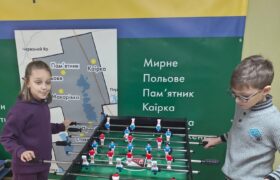
Гуманітарний центр міста Дніпра для мешканців Херсонщини, котрі виїхали з тимчасово окупованих територій або врятувалися від російських обстрілів, облаштували спортивно-ігровий простір. У цьому допомогли американські донори, зокрема Kenna Smith, а також БФ «HumAid», повідомила на своїй сторінці у Facebook начальниця Мирненської селищної військової адміністрації Скадовського району Валентина Головата.

«Загальновідомо, що спортивні ігри не лише забезпечують фізичний розвиток дітей, а й сприяють реалізації їхньої активності, переживанню значної кількості різних емоцій, пов’язаних із взаємодією з іншими дітьми, успіхами та невдачами, формуванню навичок роботи в команді, лідерських якостей.

Висловлюємо величезну вдячність американським друзям та особисто @Kenna Smith за розуміння цього та допомогу в облаштуванні спортивно-ігрового простору в Гуманітарному центрі в місті Дніпрі для мешканців Херсонщини, які виїхали з тимчасово окупованих територій або втекли від постійних ворожих обстрілів.

Скільки радісних  емоцій у дітей та їх батьків! Відтепер кожен має можливість пограти в електронний баскетбол, настільний футбол, аерохокей та настільний теніс! А тенісних столи маємо аж два! Ще один подарувала голова БФ “HumAid” пані Тетяна Sandler», – подякувала благодійникам і благодійницям Валентина Головата.

Webinar «Surrogacy: Ethical Challenges»

On December 13, 2024, the webinar ” Surrogacy: Ethical Challenges” was held. The event was organized by the NGO “Democracy Development Center”, The Ministry of Social Policy, the Public Council on Gender Issues (Ukraine) within the framework of the “16 days against gender-based violence” campaign. українською мовою

Opening the webinar, the head of the Public Council, Larysa Kobelyanska, stated that surrogacy is a complex and very urgent ethical, medical, and legal problem. It is very sensitive and painful, as well as harassment of women, sexual exploitation in general. International and national experts were invited to the webinar to discuss the problem of surrogacy.

Webinar moderator, gender expert of NGO ” Democracy Development Center” Maria Dmytrieva also reminded that currently Ukraine is one of the few countries in Europe where this practice is still allowed.

At the invitation of the organizers, the following experts took part in the webinar:

  • Marie-Josèphe Devillers, ICASM International Coalition for the Abolition of Surrogate Motherhood;
  • Taina Bien Aime, Executive Director of the Coalition Against Trafficking in Women and a founding member of Equality Now;   
  • ‘Physical and Social Harms of surrogacy on Women and Children in India’ – Dr. Sheela Suryanarayanan, Associate Professor, Centre for Women’s Studies, University of Hyderabad, India;
  • Lindita Pano, activist for children’s rights, Albania;
  • Zoryana Skaletska, Kyiv City Council member, Minister of Health of Ukraine in 2019-2020.

“The prohibition of surrogacy should be on the feminist agenda, surrogate motherhood is a component of violence against women. It harms women, eats up medical resources,” said Marie-Josèphe Devillier. According to her, this is a predatory system that profits the baby-buyers, even with domestic surrogacy, it is about the most economically vulnerable women who risk their lives and health. Such a pregnancy carries three times greater risk than a normal one.

On the example of Greece, 60% of surrogate mothers are not citizens of the country, although there this practice is defined as “altruistic”. In South Africa, local women with normal pregnancies do not have access to health care, which instead devotes its resources to accepting surrogate mothers, a similar situation is in Uganda. Instead, Italy has completely banned surrogacy, both commercial and altruistic. Also, the European Parliament has condemned this practice since 2015, and already in 2024, the EU directive was revised, adding surrogacy to the list of human trafficking crimes. There is also a decision of the Spanish court regarding the case of surrogacy, which literally states that this is not parenthood, but reproductive violence.

In her turn, Taina Bien Aime spoke about how the legislative permission for surrogacy was implemented in the state of New York. At the beginning, the women’s movement was united in its attitude to this issue, and in 2019 the bill was rejected. A year later, a hugely-budgeted campaign touting surrogacy as “an option for infertile couples and for gay parents” led to a split within the women’s caucus on the issue to “make it safer,” and the bill eventually passed. Since then, the state of New York became the capital of surrogacy, a stream of surrogacy, violation of women’s rights, and mass exploitation immediately opened. “The names of the women involved in this are unknown, they are not registered, we do not know the state of their health either before, during or after childbirth; New York has become the epicenter of trafficking,” says Taina Bien Aime.

“Surrogacy goes to poorer countries. In India, women receive several times less money for such births than in the United States. But even these incomes ultimately do not improve their economic situation. By bearing a child for others, an Indian woman loses ties with her own family, because she is restricted in contacts. This practice goes hand in hand with trafficking, prostitution, kidnapping of girls,” said Sheela Suryanarayanan.

While researching this topic in India, she learned about the case of the kidnapping of a 13-year-old girl who was raped and forced to give birth to 6 children, who were then sold. The consequences of surrogacy are the deaths of surrogate mothers, the deaths of women – egg donors, the custody and general fate of children born to order, abandoned unwanted “ordered” children, the trafficking of women and girls. That`s why commercial surrogacy was banned in India in 2021.

“We do not want Albania to become a paradise for surrogacy. We do not want women to be taken away in trafficking. Many Albanian women have already been sold into prostitution in richer countries, now they are coming to us with the offer of surrogacy. As soon as the law on allowing surrogacy was adopted in Albania, Ukrainian women also have been brought here for the same exploitation,” added Lindita Pano.  According to her, Albania, located near Italy, is a country of dental tourism: quality services are provided here at a low price for the income level of Italians. “And now we will still be a country for surrogacy tourism. At the same time, they are very actively trying to impose the legalization of prostitution on us,” says Lindita Pano.

Ukraine also has this problem, which is practically not regulated by law at a level that would at least somehow protect women involved in surrogacy, as Zoryana Skaletska, a member of the Kyiv City Council, head of the Ministry of Health of Ukraine in 2019-2020, testified.

According to her, the regulation of surrogacy is written within one page of the reproductive health documentation. Therefore, in Ukraine, the basis for regulating the legal relations of women involved in surrogacy with customers became only the contracts. They are offered to women by the other side and, because of this, are not equal. First of all, when signing such a contract, an economically unprotected woman does not know about her rights. There are no restrictions for doctors practicing in this field in the country. They have no consequences for unethical work. Ukraine has not ratified the convention on the rights of the child and biomedicine, so surrogacy does not deal with the main thing: the child has the right to be born in a loving family, and not as a result of “preserving the heritage of biomaterial”. In addition, surrogacy is an obstacle for the European integration movement of Ukraine. Stating the presence of these three key problems, Zoryana Skaletska noted that after the war, they will definitely talk about the revival of the nation, and now it is necessary to sound the alarm, because there will be a surge in the demand for surrogacy, especially taking into account the commercialization of medicine in Ukraine. Surrogacy should be completely banned in all its forms.

Maria Dmytrieva also added that immediately after the beginning of the full-scale invasion of the Russians in Ukraine, the wide advertisement of surrogacy to a foreign audience started: “Biological material is sent to us, women carry children to be sent abroad, they are taken and processed through embassies – biological parents do not even visit here. Also, for surrogacy, women are brought to us from the countries of Central Asia, where their situation is even worse than ours.” Lindita Pano also testified that in Albania, children born “to order” are given away even without registration. “In Ukraine, a woman who is a surrogate mother does not even have the right to this child. At the same time, the law does not even force the customer-parents to pick up the newborns.  Even if the birth mother wanted to take this child away, they wouldn’t let her do it. These children do not have any citizenship, our orphanages are filled with surrogate children, who for some reason were not taken away by the customers, because such boys and girls cannot be adopted,” Maria concluded.

Вебінар «Сурогатне виношування: етичні виклики»

13 грудня 2024 року відбувся вебінар «Сурогатне виношування: етичні виклики». Захід був організований НУО «Центр – Розвиток демократії», Міністерством соціальної політики та Громадською радою з гендерних питань (Україна) в межах кампанії «16 днів проти гендерного насильства». English

Відкриваючи вебінар, глава Громадської ради Лариса Кобелянська констатувала, що сурогатне материнство – складна і дуже нагальна етична, медична, правова проблема. Вона дуже чутлива та болісна, як і загалом домагання до жінок, сексуальна експлуатація, для обговорення проблеми сурогатного материнства до вебінару залучили міжнародних, а також національних експертів.

Модераторка вебінару, гендерна експертка НУО «Центр – Розвиток демократії» Марія Дмитрієва також нагадала, що нині Україна одна з небагатьох країн в Європі, де досі дозволяється ця практика.

На запрошення організаторів участь у вебінарі взяли:

  • Марі-Жозеф Девільє, Міжнародна коаліція за скасування сурогатного материнства (ICASM);
  • Таїна Б’єн Еме, виконавча директорка Коаліції проти торгівлі жінками та співзасновниця організації Equality now;
  • Шіла Сур’янараянан, доцентка Центру жіночих студій, Університет Хайдерабада, Індія;
  • Ліндіта Пано, активістка за права дітей, Албанія;
  • Зоряна Скалецька, депутатка Київради, очільниця МОЗ України у 2019-2020.

«Заборона сурогатного материнства повинна бути на порядку денному феміністичного руху, сурогатне материнство є складовою насильства щодо жінок. Воно шкодить жінкам, виїдає медичний ресурс», – зазначила Марі-Жозеф Девільє. З її слів, це хижа система, вигоду від якої отримують покупці дітей, навіть при сурогатному материнстві усередині країни йдеться про найбільш незахищених економічно жінок, які ризикують своїм життям та здоров’ям. Така вагітність несе утричі більший ризик, ніж звичайна.

На прикладі Греції – 60% сурогатних матерів не є громадянками країни, хоча там ця практика визначається як «альтруїстична». У Південній Африці місцеві жінки зі звичайною вагітністю не мають доступу до медичного обслуговування, яке натомість віддає свої ресурси для приймання сурогатних матерів, схожа ситуація в Уганді. Натомість Італія повністю заборонила сурогатне материнство, як комерційне, так і альтруїстичне. Також Європейський Парламент засуджує цю практику з 2015 року, вже у 2024 році була переглянута й директива ЄС, яка додала сурогатне материнство до переліку злочинів торгівлі людьми. Є і рішення іспанського суду щодо випадку сурогатного материнства, в якому дослівно сформульовано, що це – не батьківство, а репродуктивне насилля.

У свою чергу, Таїна Б’єн Еме розповіла про те, як впроваджувався законодавчий дозвіл на сурогатне материнство у штаті Нью-Йорк. На початку жіночий рух був єдиним у ставленні до цього питання, та у 2019 році вдалося відхилити законопроект. Вже через рік була підготовлена надзвичайно великобюджетна кампанія, яка розповідала про сурогацію як про «можливість для безплідних пар та для гей-батьків», тому всередині жіночої групи законодавців відбулося розділення щодо цього питання, щоб «зробити це безпечнішим», і законопроект врешті пройшов. Відтоді штат Нью-Йорк перетворився на столицю сурогації, одразу відкрився потужний потік сурогатного материнства, порушення прав жінок, масової експлуатації. «Імена залучених до цього жінок невідомі, вони не реєструються, ми не знаємо стану їхнього здоров’я ані до, ані під час, ані після пологів; Нью-Йорк став епіцентром трафікінгу», – каже Таїна Б’єн Еме.

«Сурогатне материнство йде у бідніші країни. В Індії жінки отримують в кілька разів менші кошти за такі пологи, ніж у США. Але навіть ці доходи в підсумку не покращують їхнє економічне становище. Виношуючи дитину для інших, індійська жінка втрачає зв’язок з власною сім’єю, бо її обмежують у контактах. Ця практика йде пліч-о-пліч з трафікінгом, проституцією, із викраданням дівчат», – розповіла Шіла Сур’янараянан.

Досліджуючи цю тему в Індії, вона дізналася про випадок викрадення 13-річної дівчинки, яку гвалтували і змусили 6 разів народити дітей, котрих потім продали. Наслідками сурогації є смерті сурогатних матерів, смерті донорок яйцеклітин, опіка та взагалі подальша доля народжених на замовлення дітей, кинуті напризволяще непотрібні «замовні» діти, трафік жінок та дівчат. Тому комерційне сурогатне материнство було заборонене в Індії у 2021 році.

«Ми не хочемо, щоб Албанія стала раєм для сурогатного материнства. Не хочемо, щоб жінок забирали у трафік. Багато албанок вже продали у проституцію в багатші країни, тепер вони йдуть до нас зі пропозицією сурогатного материнства. Щойно в Албанії прийняли закон про дозвіл на сурогацію, сюди також почали везти українок, для такої ж експлуатації», – додала Ліндіта Пано. З її слів, для розташованої неподалік Італії Албанія є країною стоматологічного туризму: тут надають якісні послуги за невелику для рівня доходів італійців ціну. «А тепер будемо ще країною для сурогатного туризму. Нам ще водночас дуже активно намагаються нав’язати легалізацію проституції», – свідчить Ліндіта Пано.

Україна також має цю проблему, яка практично ніяк не регулюється законодавчо на рівні, який би хоч якось захищав залучених у сурогацію жінок, засвідчила депутатка Київради, очільниця МОЗ України у 2019-2020 роках Зоряна Скалецька.

З її слів, регулювання сурогатного материнства прописане у межах однієї сторінки у документації щодо репродуктивного здоров’я. Відтак в Україні основою регулювання правових відносин залучених у сурогацію жінок з замовниками стали самі договори, які пропонувала жінкам інша сторона і які через це не є паритетними. Передусім, підписуючи подібний договір, економічно не захищена жінка не знає і про свої права. В країні немає і будь-якого обмеження для практикуючих у цій сфері лікарів. Вони не мають ніяких наслідків за неетичну працю. Україна не ратифікувала і конвенцію щодо прав дитини і біомедицини, тому в сурогації взагалі не йдеться про основне: дитина має право народитися у люблячій родині, а не як наслідок «збереження спадщини біоматеріалу». Крім того, сурогація є перешкодою для євроінтеграційного руху України. Констатуючи наявність цих трьох ключових проблем, Зоряна Скалецька зазначила, що після війни обов’язково заговорять про відродження нації, і вже тепер треба бити на сполох, бо буде сплеск і попиту на сурогацію, особливо з урахуванням комерціалізації медицини в Україні. Сурогатне материнство має бути повністю забороненим, у всіх його формах.

Марія Дмитрієва також додала, що одразу після початку повномасштабного вторгнення росіян в Україні почали широко рекламувати сурогатне материнство на закордонну аудиторію: «До нас присилають біоматеріал, жінки виношують дітей за кордон, їх забирають та оформлюють через посольства – біологічні батьки навіть не навідуються сюди. Також для сурогації до нас везуть жінок з країн Середньої Азії, в яких становище ще гірше за наше». Ліндіта Пано також засвідчила, що в Албанії народжених «на замовлення» дітей віддають навіть без реєстрації. «В Україні жінка – сурогатна мати навіть не має права на цю дитину. При цьому батьків-замовників законодавство навіть не змушує забирати новонароджених. Навіть якби народивша мати і хотіла забрати цю дитину, цього не дадуть зробити. Громадянства в цих дітей немає ніякого, наші сиротинці заповнені сурогатними дітьми, яких з якихось причин не забрали замовники, бо таких дітей не можна і всиновити та вдочерити», підсумувала Марія Дмитрієва.

Webinar «Youth advocacy campaigns. We implement the resolutions of the UN Security Council “Youth, peace and security” and “Women, peace and security”»

On December 11, 2024, the webinar “Youth Advocacy Campaigns. We are implementing the resolutions of the UN Security Council “Youth, peace and security” and “Women, peace and security” was held. The event was organized by the NGO “Democracy Development Center”, the Public Council on Gender Issues (Ukraine) to summarize the work of young people during the year and within the framework of the “16 days against gender-based violence” campaign, their participation in the decision-making process to defend the rights and opportunities of children and young people at the level of cities and villages of their communities. українською мовою

The event was moderated by the head of the NGO “Democracy Development Center” Ella Lamakh. She thanked the representatives of local authorities and public organizations, who worked to integrate internally displaced Ukrainian men and women in local communities during the year, while ensuring the requirements of international standards, which are important for Ukraine, especially in the conditions of devastating Russian military aggression. In particular, it was the network of feminists of Canada, the Council of Europe, OutcomesX, LLC, the international organization Project Harmony, Inc. with the support of the US Embassy who helped to work, to hold meetings and training.

During the webinar, the present activists talked about the experience of the community of Pershotravensk, Dnipropetrovsk region, which accepted the flow of IDPs from neighboring Donetsk region from the very beginning, Haivoron, Kirovohrad region, in which the number of displaced people was equal to the number of local residents of the town, Tovtry and Zastavna of Chernivtsi region, Lutsk, Volyn region, about the experience of the communities of Donetsk, Lviv, Mykolayiv regions.

Вебінар «Адвокаційні кампанії молоді. Впроваджуємо в життя резолюції Ради Безпеки ООН “Молодь, мир та безпека” та “Жінки, мир та безпека”»

11 грудня 2024 року відбувся вебінар «Адвокаційні кампанії молоді. Впроваджуємо в життя резолюції Ради Безпеки ООН “Молодь, мир та безпека” та “Жінки, мир та безпека”». Захід був організований НУО «Центр – Розвиток демократії», Громадською радою з гендерних питань (Україна) для підсумування роботи молоді протягом року та в межах кампанії «16 днів проти гендерного насильства», їхньої участі у процесі прийняття рішень для відстоювання прав та можливостей дітей і молоді на рівні міст і сіл своїх громад. English

Захід провела голова НУО «Центр – Розвиток демократії» Елла Ламах. Вона подякувала присутнім представникам місцевої влади, громадських організацій, котрі протягом року працювали з тим, щоб інтегрувати внутрішньо переміщених українців та українок в місцевих громадах, забезпечити при цьому вимоги міжнародних стандартів, котрі є важливими для України, тим більше в умовах руйнівної російської військової агресії. Зокрема, працювати, проводити зустрічі та навчання допомогла мережа феміністок Канади, Рада Європи, OutcomesX, LLC, міжнародна організація Project Harmony, INC. за підтримки Посольства США.

Під час вебінару розповідали про досвід громади міста Першотравенськ Дніпропетровської області, у котрому прийняли від самого початку потік ВПО із сусідньої Донеччини, міста Гайворон Кіровоградської області, в котрому чисельність переселенців дорівнювала числу місцевих жителів, села Товтри, міста Заставна Чернівецької області, міста Луцьк Волинської області, про досвід громад Донецької, Львівської, Миколаївської областей.

Webinar “Pornography: A Danger to Women and Children”

On December 5, 2024, the webinar “Pornography: A Danger for Women and Children” was held. The event was organized by the NGO “Democracy Development Center”, the Ministry of Social Policy and the Public Council on Gender Issues (Ukraine). українською мовою

 At the beginning of the discussion, the head of the Public Council on Gender Issues at the “Equal Opportunities” IFU, Larysa Kobelyanska, noted that about 1,000 people had registered for the event, and no topic had gathered such a large number of people before, because the topics chosen for the events of this year’s campaign against gender-based violence are extremely important and painful.

Experts were commenting the following topics to discuss:

  • Tatiana Kotlyarenko, international expert, the US, former OSCE ODIHR Advisor on Anti-Human Trafficking Issues; 
  • Yurii Hanushchak, Police Colonel, Head of the 3rd Department (Coordination of Activities) of the Department of International Police Cooperation (DIPC), National Police of Ukraine;
  • Anna Zobnina, European Network of Migrant Women;
  • Olena Zaitseva, expert, lawyer in international law, Ukraine;
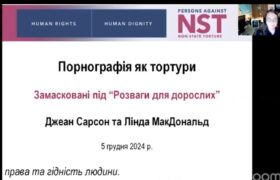
  • “Pornography as torture”, Linda McDonald and Jeanne Searson, women’s rights activists, Canada
  • “OnlyFans and its dangers”, Julie Bindel, journalist, the UK
  • “Pornography is prostitution with a camera”, Melissa Farley, Ph.D., Executive Director, Prostitution Research & Education, US

The webinar was moderated by the gender expert of the NGO “Democracy Development Center”, Maria Dmytrieva. She thanked Tatiana Kotlyarenko, an international expert from the USA, former adviser to the OSCE ODIHR on issues of combating human trafficking, for her participation, because it was Ms. Tatiana who involved her colleagues – internationnal experts – to the events. In turn, Tatiana Kotlyarenko said that since the beginning of the full-scale Russian invasion of Ukraine, there has been a massive increase in online requests for videos of sexual aggression against Ukrainian women. This applies not only to pornographic videos of the occupied territories, where women suffer from the crimes of military occupation, but also pornographic content that involves Ukrainian refugee women, Ukrainian migrant women in the EU, as well as Ukrainian children. That is, the flood of war-affected women and children from Ukraine has become an area of ​​interest for human traffickers, primarily for sexual exploitation and abuse.

The representative of the National Police of Ukraine, police colonel Yurii Hanushchak, noted that as long as the production and distribution of pornographic content is a crime under Ukrainian law, the police officers will fulfill their duties and prevent this activity. However, he noted that in Ukraine this area is not yet as dangerous as in other countries, although Ukraine is already not only the country of origin, of traffic, but also the destination of human trafficking. Also, when qualifying video content, private transmissions should be distinguished from commercial circulation of pornography involving minors, extreme actions, violence, etc. According to the representative of the National Police, this issue needs legislative regulation.

However, the audience saw a video by Ukrainian expert, international law lawyer Olena Zaytseva, in which she talked about attempts to legalize pornography in Ukraine and why similar laws lobbying for porn content are unacceptable. In particular, in November 2024, the Verkhovna Rada of Ukraine registered a draft law on the legalization of the production and distribution of porn. It supposedly is for restrictions to protect minors, but in practice it is impossible to provide this protection. Instead, the spread of porn leads to an increase in aggressive attitudes towards women, the involvement of minors in prostitution, and the spread of criminal videos is uncontrolled.

Anna Zobnina, strategic and executive director of the European Network of Migrant Women, noted that she would never recognize any involvement in sexual exploitation as “a job”, noting also that it is difficult to find a Ukrainian refugee or migrant woman in a difficult situation who would not be offered prostitution or pornography by human traffickers. Also, according to her, traffickers in EU countries visit camps for migrant women posing as social workers, they offer transportation services to other countries, housing or other opportunities, and then these women disappear at all and they never return. Porn content always contains elements of violence, and it is a form of human prostitution – only filmed, and the connection between pornography and prostitution is undeniable. This is also stated in a special resolution of the European Parliament. Also, Anna Zobnina notes, the problem is not only with the large platforms of porn content, but with the mass of small platforms where porn content circulates. 80% of the videos are “home videos”, and it is important that many migrant women in a difficult situation are offered to make these videos by their abusive partners.

“Torture is never consent,” emphasized Canadian activists Linda MacDonald and Jeanne Searson. Journalist and feminist Julie Bindel (Great Britain) also spoke about the dangers of the “OnlyFans” platform.

“81% of women involved in porn suffer from PTSD. Pornography is scripted prostitution,” said Melissa Farley, an American feminist and executive director of “Prostitution Research & Education”.

Summing up the event, the moderator Maria Dmytrieva reminded that in Ukraine today no one talks about the impact of porn on the psyche of children, and expressed hope that seeing the international studies will influence the point of view of Ukrainian legislators and law enforcement officers.

Earlier it was reported that the NGO “Center for Democracy Development” implemented an information campaign “What is an Equality Model” (materials are available at links: 1, 2, 3, 4, 5, 6).